

Why automated security for smart contracts is a big deal
Smart contracts are basically code that holds real money and runs on a public, hostile network 24/7. Once deployed, you usually can’t hotfix them. That makes security less like “ship and patch later” and more like “perform heart surgery where a typo costs millions”.
That’s where automated vulnerability detection comes in. Instead of relying only on a tired auditor scrolling through Solidity at 3 a.m., you plug your code into specialized tools that systematically search for known bugs, weird edge cases and dangerous patterns before the contract ever sees mainnet.
We’ll walk through what tools to use, how to build a practical flow around an automated smart contract vulnerability scanner, and what to do when things go wrong. Along the way, I’ll suggest a few slightly unconventional tricks that teams often overlook.
—
What automation can (and cannot) do for smart contract security
Automation in smart contract security is about amplifying human effort, not replacing it. Scanners, fuzzers and analyzers are brilliant at three things:
— повторяемость (doing the same checks a thousand times without boredom)
— масштабируемость (running on every commit, every branch, every fork)
— систематичность (they never “forget” a category of bug)
But they are terrible at understanding business logic, economic design and game theory. An automated engine may detect a reentrancy pattern but will not tell you if your auction mechanism is economically exploitable via subtle griefing or MEV.
The right mindset: use automation to clear out 70–80% of low‑hanging bugs so that humans (internal devs or a smart contract security audit service) focus on the truly tricky parts.
—
Necessary tools: building your automated defense stack
Think of blockchain smart contract security tools as layers, not as a single “magic scanner”. Each layer catches different bug classes.
1. Static analyzers and linters
Static analyzers read the code without executing it. They look for dangerous patterns and anti‑patterns:
— Reentrancy and missing checks
— Arithmetic overflows (where still relevant)
— Dangerous `delegatecall`, `tx.origin` usage, unchecked external calls
— Access control and ownership issues
Linters, meanwhile, enforce style and best practices: consistent visibility, explicit data locations, sensible naming, and so on. They don’t sound sexy, but half of security is just making code boring and predictable.
Non‑obvious tip: configure your static analyzer with project‑specific rules. For example, if your protocol uses a custom access‑control pattern, add a rule that flags any function not guarded by your modifier or role check. Turning your governance style into a rule catches “oops, forgot the modifier” bugs instantly.
—
2. Automated scanners and fuzzers
This is where an automated smart contract vulnerability scanner shines. These tools simulate contract execution with many different inputs and flows. Some use symbolic execution, some use fuzzing, many combine techniques.
They can help uncover:
— Logic paths you didn’t realize existed
— Invariant violations (e.g., “total supply must never decrease except during burn”)
— Weird edge cases around governance, pausing, upgrades
Fuzzers get especially powerful when you feed them protocol‑aware invariants. Instead of “throw random inputs at functions”, you say “under any sequence of actions, this condition must hold”. Then let the machine try to break your assumptions.
Unusual idea: build a “red‑team fuzz harness” around your own protocol. Add functions in tests that simulate a malicious user, a malicious governance proposal, or a malicious upgrader, then fuzz those behaviors. You don’t ship that code to mainnet; it only lives in your test suite.
—
3. Dynamic testing and local mainnet simulations
Static tools don’t see real‑world behavior: gas limits, mempool races, cross‑contract interactions. Dynamic tests and local forked networks fill in the gaps.
Spin up a fork of mainnet or your target chain and:
— Impersonate whale wallets and governance accounts
— Interact with real deployed protocols your contract will talk to
— Simulate upgrades, pausing, emergency withdrawals
Here’s a non‑standard approach: create “chaos scripts” that randomly reorder transactions, toggle gas prices, and simulate partial failures (like a dependent oracle reverting). Then assert that your critical invariants still hold.
—
4. Human services around automation
Even if you prioritize automation, you’ll still want human eyes and specialized services at some stages:
— A smart contract code review and auditing process (internal or external) that reads findings from the tools and validates them.
— Occasional smart contract penetration testing services, which combine manual exploitation attempts with custom tooling to go beyond out‑of‑the‑box scanners.
— A trusted smart contract security audit service for major releases and protocol‑level upgrades, focusing on economic security and game‑theoretic attacks.
The trick: make these humans consumers of your automated outputs, not substitutes. Feed them clean, well‑annotated findings instead of raw noise.
—
Step‑by‑step process: from first line of code to pre‑deployment
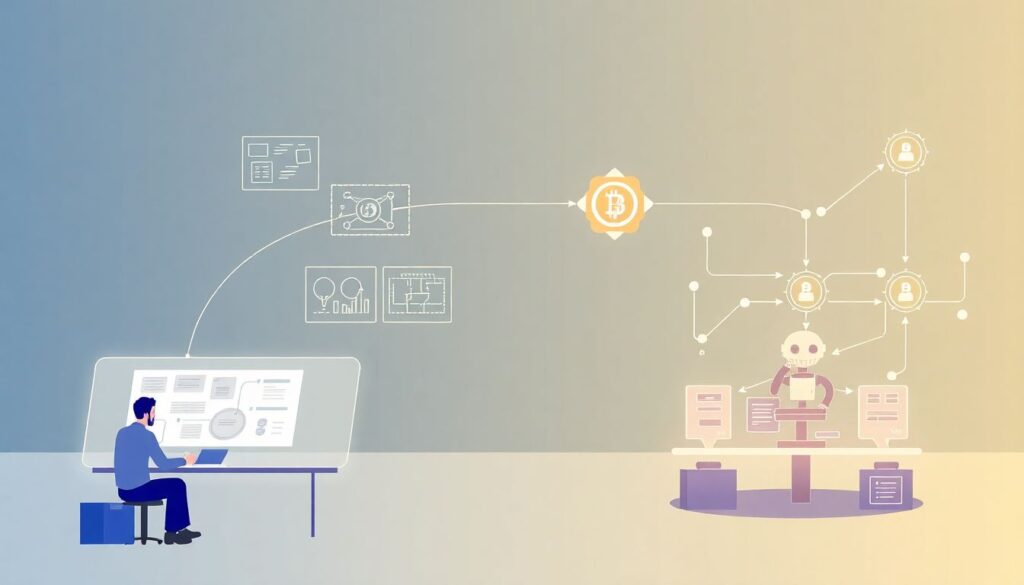
Let’s stitch all this into a realistic lifecycle. Imagine you’re building a protocol and you want automation baked in rather than bolted on.
Step 1: Design with security invariants, not just features
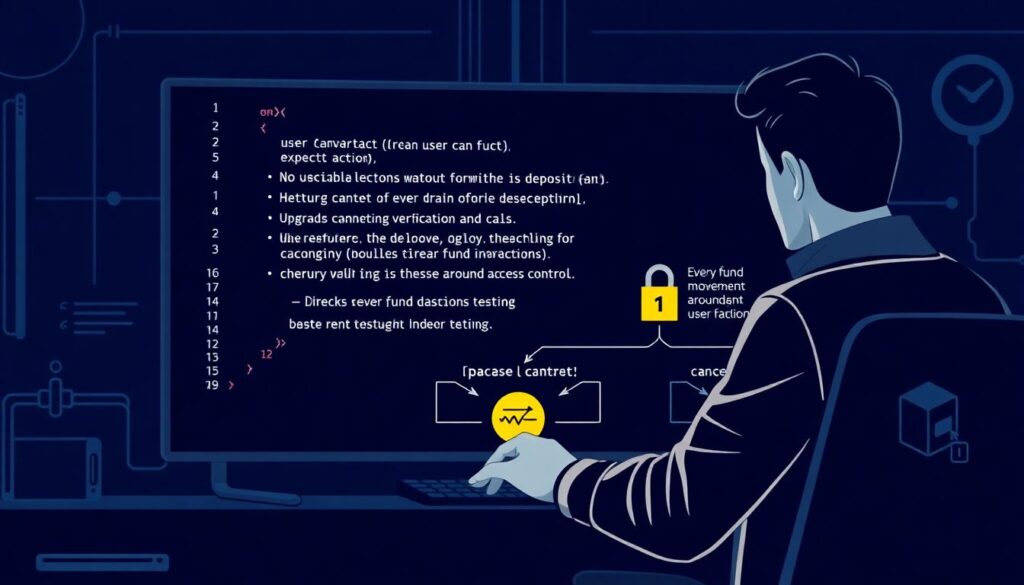
Before writing code, list a handful of core truths that must never be violated:
— No user can lose funds without performing an explicit action.
— Governance can never drain user deposits directly.
— Upgrades cannot bypass access control.
Turn those into invariants you’ll later enforce in tests and fuzzing. This shifts you from “we hope it’s safe” to “we formally require these properties”.
Non‑standard twist: write these invariants in plain English first, then ask different team members (devs, PMs, risk folks) to interpret them. If two people understand the invariant differently, it’s likely ambiguous in code as well.
—
Step 2: Set up your CI/CD security pipeline early
Don’t wait until you “finish” coding to wire up security checks. Set up continuous integration from week one:
— Run linters and static analyzers on every pull request.
— Run fast unit tests and a minimal fuzz suite on every push to a main branch.
— Block merges if severity‑high findings appear.
Minimal yet powerful CI layout:
— “Fast lane” jobs: under 5 minutes, always run.
— “Deep lane” jobs: heavier fuzzing and more expensive analysis, run nightly or on demand.
This way, smart contract security becomes a background process, not a panic button before launch.
—
Step 3: Integrate scanners with your test framework
Instead of treating a vulnerability scanner as something you manually point at a repo once a month, weave it into your test framework.
— Write harness contracts that expose high‑risk functions in controlled ways.
— Give the scanner clear entry points and data types.
— Use metadata or naming conventions to indicate “this function is security‑critical”.
Uncommon idea: build a simple DSL (even just structured comments) inside your tests to declare invariants and expected failures, e.g.:
«`
/// @invariant totalDeposits == token.balanceOf(address(this))
/// @target function deposit(uint256 amount)
«`
Then translate these annotations into settings for your scanner or fuzzer. It feels like documentation, but it actually powers your security tooling.
—
Step 4: Run deep analysis before each major milestone
As you approach a testnet or mainnet release, crank up the intensity:
— Long‑running fuzz campaigns (hours or days).
— Symbolic execution with broader constraints.
— Forked‑network simulations that replay historical market conditions.
Coordinate the results with your human reviewers. Let the automated runs highlight suspicious patterns and code paths; let humans decide which ones are meaningful in your economic model.
Pro tip: explicitly tag every resolved finding with one of three labels: “fixed”, “false positive”, “accepted risk”. That history will be invaluable when you repeat audits or answer due‑diligence questions from partners and investors.
—
Step 5: Post‑deployment monitoring as part of security
Automation doesn’t have to stop at deployment. You can:
— Monitor on‑chain events for anomalous patterns (sudden spikes in failed calls, weird token flows).
— Compare runtime behavior to your pre‑deployment invariants.
— Create bots that pause certain actions automatically if dangerous patterns occur.
Quasi‑radical suggestion: treat every deployment like a beta unless governance explicitly promotes it to “stable”. During the “beta” phase, wire monitoring bots that can trigger emergency governance paths quickly, based on quantified signals from on‑chain metrics.
—
Troubleshooting: when your security automation misbehaves
Automation is great until it drowns you in warnings, misses something obvious, or just refuses to run properly in CI. Here’s how to handle the usual pain points.
Problem 1: Too many false positives
Scanners often flag patterns that are safe in your context. Left unchecked, this leads to alert fatigue and everyone just ignores the tool.
What to do:
— Tune the rules: disable checks that are irrelevant for your architecture (e.g., ERC‑20 specific rules in an NFT‑only repo).
— Whitelist well‑understood constructs with clear comments explaining why they’re safe.
— Introduce severity levels and only block CI on high‑impact findings.
Quirky, but useful: maintain a “security decisions” document where every suppressed warning is documented with a short argument. This keeps you honest and massively speeds up external audits because reviewers see your rationale, not just the code.
—
Problem 2: Coverage gaps and “green but unsafe” builds
A test run going green doesn’t mean the protocol is safe. It might just mean your tests are weak.
Ways to tighten coverage:
— Use coverage tools that show which lines and branches are touched by tests and fuzzers.
— Focus fuzzing efforts on the most complex state transitions, not trivial getters.
— Regularly review invariants; add new ones when novel attack patterns are discovered in the ecosystem.
Non‑standard habit: every time a high‑profile hack hits the news, run a “post‑mortem drill” in your repo. Ask: “If our code had this vulnerability, would our current tools and tests catch it?” If not, add new tests and rules, even if your code is already safe.
—
Problem 3: Tool conflicts and CI instability
Different blockchain smart contract security tools can conflict on compiler versions, node versions, or require awkward Docker setups.
To reduce friction:
— Standardize on one toolchain image (e.g., a single Docker image) that contains all compilers and tools used in CI.
— Version‑lock your scanners and analyzers just like application dependencies.
— Treat security tooling updates as explicit tasks, with changelogs reviewed like code.
Slightly unusual approach: treat your security CI as its own product. Give it a tiny “owner team”, a changelog, and a backlog. This mindset shift prevents it from decaying into an unmaintained pile of shell scripts.
—
Problem 4: Misalignment between devs and auditors
Developers might see tools as blockers; auditors might see developers as careless. Misalignment slows everything.
Bridging the gap:
— Share the same dashboards: let devs, auditors, and ops see identical automated reports.
— Do short “finding review sessions” where developers present how they fixed top issues.
— Let external reviewers plug their own smart contract penetration testing services directly into your pipeline, rather than passing around ZIP files.
This transforms security from a gate at the end into a shared, ongoing process.
—
Non‑standard strategies to level up your automated security
To close, a few ideas that go beyond the usual “run a scanner before launch” advice.
— Security guild inside the dev team. Create a rotating “security champion” role among engineers who owns the scanners, fuzz rigs and rules. Rotation spreads knowledge and avoids bottlenecks.
— Deliberate bug planting (Chaos Bugs). Occasionally inject controlled, known vulnerabilities in a feature branch and see whether your automation discovers them. If it doesn’t, that’s a loud signal to strengthen your tooling.
— Economic fuzzing. Extend fuzzing from pure function calls to simulated markets: bots trading against your protocol, arbitrage attempts, governance votes. Watch how invariants hold under economic pressure, not just technical input ranges.
— Pipeline as marketing. When talking to partners and users, don’t just say “we had an audit”. Describe your automated pipeline, your smart contract code review and auditing practices, and how you continuously run tools. It builds real trust.
If you treat automated vulnerability detection not as an afterthought but as a core part of how you build, your protocol gets a strong, repeatable baseline of safety. Then human experts—internal reviewers, external auditors, and specialized smart contract penetration testing services—can focus on what only people can do: understanding incentives, creativity and the messy real‑world ways attackers think.