

Why synthetic data is quietly redefining blockchain testing

Most teams hit the same wall: you have a promising blockchain idea, a half-built smart contract, a few unit tests, и… nothing that resembles the brutal chaos of mainnet. Real-world datasets are sensitive, regulated, or simply unavailable. Testnets are slow, unpredictable, and don’t reproduce that bug your customer hit last week. That’s where synthetic data generation steps in: you algorithmically create realistic on-chain activity — wallets, transfers, DeFi strategies, NFT trades, governance votes — without touching production data or leaking user secrets. Done right, it lets you rehearse Black Friday–level loads, edge cases, and attack scenarios in a safe lab, long before a single real transaction is broadcast.
Synthetic data isn’t about faking reality; it’s about compressing years of messy behavior into hours of deterministic, repeatable experiments that actually break your code before users do.
From handcrafted mocks to programmable blockchain chaos
If your tests today rely on a couple of hardcoded wallets and three happy-path transactions, you’re effectively testing a payment processor with a calculator demo. Modern blockchain testing tools for synthetic data generation automate everything: they spin up forked chains, inject thousands of wallets with diverse balances, replay market volatility curves, model front-running bots, and even simulate validator downtime. Instead of spending days scripting contrived scenarios, you define distributions and constraints: “20% of users are NFT flippers, 5% are MEV bots, gas spikes to X every N blocks, 1% of tx are malformed.” The tool turns this into a torrent of deterministic on-chain events you can replay, compare across builds, and feed into monitoring pipelines until your dashboards tell you the whole story, not just the happy one.
Inspiring example: saving a DeFi launch 48 hours before go‑live
A mid-size DeFi team I worked with (let’s call them “DeltaPool”) was two days from mainnet. Their contracts had passed audits, unit tests were green, and they’d hammered public testnets. Still, they felt uneasy: all tests assumed rational liquidity providers. We wired in a blockchain test data generator for smart contracts and modeled three hostile behaviors: liquidity sniping on listing, rapid in-and-out liquidity withdrawal, and latency-based arbitrage across AMMs. Within an hour of synthetic stress runs, a subtle reentrancy-like griefing vector emerged: under specific timing and gas patterns, an attacker could lock a pool and force unbounded slippage for late LPs. Audits had missed it because no one had recreated that ugly combination of mempool pressure and pool asymmetry. The team patched the logic, re-ran identical synthetic scenarios, and saw the exploit window close, along with a noticeable stabilisation of pool metrics under load.
They shipped on time — and, more importantly, didn’t learn about that bug from Twitter threads and on-chain autopsies.
Why enterprises are finally taking synthetic blockchain data seriously
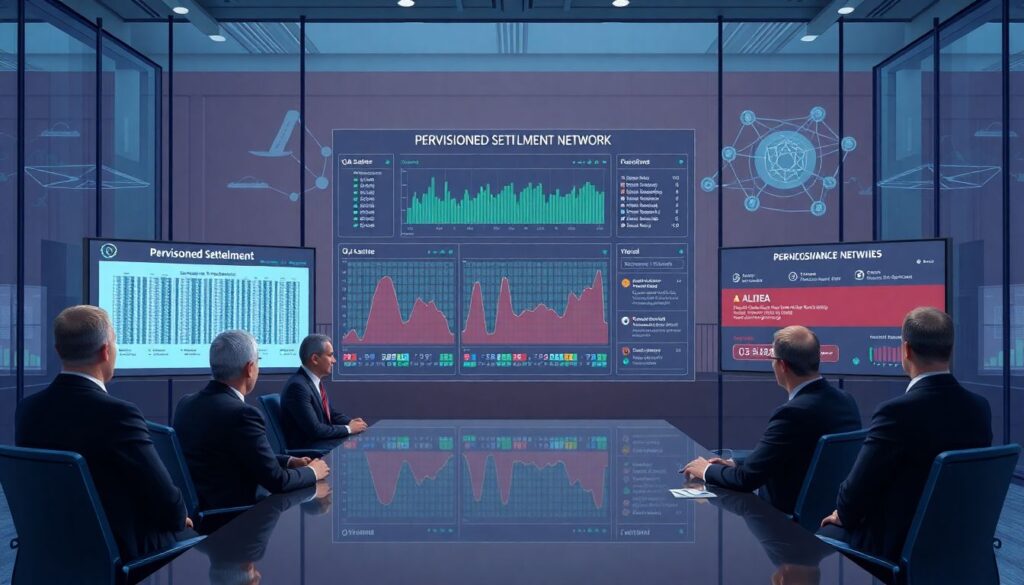
Large organizations tend to move slowly until something breaks expensively. One banking consortium piloting a permissioned settlement network hit that point during user acceptance testing: their QA dataset was a sanitized export of last quarter’s activity, stripped of anything interesting by compliance. The result was a beautifully passing test suite that never saw concurrent batch settlements, regulatory freeze operations, or partial rollback scenarios. They adopted enterprise blockchain testing and simulation platforms with built-in synthetic data engines: these platforms could mirror the bank’s domain model — accounts, jurisdictions, instruments, SLAs — and then generate thousands of legally-plausible but entirely artificial transactions. Suddenly, they could stage 10× peak-day load while toggling a simulated jurisdictional outage and random reconciliation failures. Performance bottlenecks, locking issues, and flawed retry logic surfaced in days, not months, and without touching a single real customer record.
Case: NFT marketplace that stress-tested culture, not just code
An NFT marketplace I’ll call “ArtFlux” wanted to prepare for a hyped drop with celebrity artists and time-limited auctions. Their previous drop had buckled under traffic, and they’d underestimated not only load but the “social” behavior: bots, last-second snipes, mass cancellations. This time, they integrated synthetic blockchain data generation services that consumed their historical on-chain public data and learned typical activity cycles, then amplified them and introduced adversarial agents. The system produced a replay of a “turbo drop”: 20× usual traffic, gas spikes, wallets placing thousands of tiny bids, and coordinated cancel/rebid patterns. ArtFlux discovered that their auction finalization logic didn’t handle extreme bid churn and that their indexing pipeline lagged by minutes under this synthetic storm. They re-architected finalization to be idempotent, added backpressure to indexing, and ran the same synthetic scenario again. Only when the dashboards stayed flat — and bidder UX remained stable — did they green‑light the launch.
The real event ended up quieter than their synthetic rehearsal, which is exactly how you want it.
How to grow your skills in synthetic data–driven blockchain dev
If you’re a developer, you don’t need a full platform on day one. Start by building small scenario generators around your stack. For EVM, that might be scripts that spawn a hundred wallets, randomize balances, and fuzz function parameters and gas prices while recording chain state after each block. Over time, you’ll graduate to more declarative patterns: property-based testing, generative models for user behavior, and even agent-based simulations. Explore open-source blockchain development sandbox with synthetic data support — many modern frameworks let you fork mainnet, anonymize or perturb real transactions, then top them up with algorithmically generated events. The mental shift is to treat “data” as a first-class test artifact: version it, label scenarios, and be able to say, “Release 1.3 passed under scenario set X, which includes 10k liquidation cascades and 2k governance votes with conflicting parameters.”
Once you think this way, adding a new feature without a matching synthetic scenario will feel irresponsible.
Case: compliance‑driven privacy and synthetic ledgers

Not every story is about speed or scale. A European fintech building a stablecoin-based payroll system had a different constraint: regulators wanted robust testing, but HR and payroll data could never leave a tightly controlled perimeter. Cloning mainnet and stripping identifiers was still too risky. The team built an internal pipeline where HR events — hires, terminations, salary changes — were abstracted into schemas and then fed into a generator that produced a fully synthetic ledger, respecting country-specific tax rules and payout calendars but containing zero real employees. This synthetic ledger became their golden dataset for CI, performance testing, and demo environments. Because the mapping from real events to synthetic events was one-way and heavily randomized, compliance signed off; yet engineers still debugged against patterns that accurately mirrored cross-border payroll complexity, failed settlements, and retroactive corrections.
Synthetic data here wasn’t just a convenience; it was the only way to reconcile aggressive iteration with data protection law.
Choosing the right tools without drowning in buzzwords
The ecosystem of blockchain testing tools for synthetic data generation is noisy, but you can filter options with a few pragmatic questions. Does the tool let you describe behaviors in your domain language, or are you stuck with generic “send N transactions from wallet A to B”? Can scenarios be version-controlled next to your code, or are they trapped in a GUI? How easy is it to deterministically replay a failing synthetic run and diff it against a passing one? Pay attention to how the tool models time (block time vs. wall-clock), randomness (seeded vs. opaque), and adversarial agents (bots, faulty validators, Byzantine nodes). If you’re in a regulated space, insist on clear isolation between any real input data and generated artifacts, and make sure you can prove that your synthetic datasets carry no re-identification risk.
And, of course, check that integrating the tool doesn’t require rewriting your entire deployment pipeline.
Resources to learn synthetic blockchain testing fast
You don’t have to learn this in isolation. Start with research on synthetic data generation in traditional finance and adapt the ideas: order book simulations, agent-based models, stress scenarios. Then dive into blockchain‑specific content: workshops from dev tooling vendors, conference talks on chain forking, fuzzing, and adversarial testing, and the documentation of major enterprise blockchain testing and simulation platforms that often share battle-tested scenario patterns. Some open-source repos provide ready-made harnesses to replay historical blocks with perturbed parameters, handy for experimenting with your own generators. Look for tutorials that show end-to-end flows: define a scenario, generate synthetic tx, run your nodes or contracts, collect metrics, and automatically mark the build as failed when regression thresholds are crossed.
Once you’ve done this a few times, you’ll start curating your own scenario library the way you curate reusable code modules.
The next frontier: synthetic-first blockchain engineering
The long-term vision is straightforward: every serious web3 project should have a synthetic-first mindset, where no feature ships without surviving hostile, noisy, and weirdly realistic test chains. With tools maturing and synthetic blockchain data generation services becoming more accessible, the barrier to entry is dropping. Whether you’re hacking on a weekend NFT game or maintaining critical financial rails, treating synthetic data as a core dependency — not a nice-to-have add-on — will save you incidents, reputation damage, and sleepless nights. Start with one realistic scenario, automate it, and keep raising the bar until your test environment feels scarier than mainnet. When that happens, mainnet launches stop being gambles and start feeling like well-rehearsed deployments on a stage you already know.
And if your pipeline today is still “deploy and hope,” consider this your nudge to build that synthetic gauntlet your code deserves.