
Why AI-assisted on-chain governance suddenly matters

If you’re working on climate or social impact projects, you’ve probably felt the pain of slow, political, spreadsheet-driven decision‑making. Now imagine rules encoded in smart contracts, voting recorded on-chain, and AI helping you sift through complex data before you vote. That, in a nutshell, is ai blockchain governance for sustainability projects: using blockchains as transparent “governance rails” and AI as an analytical co‑pilot. Instead of endless steering committees, you get verifiable procedures, open audit trails and machine‑assisted insights about emissions, budgets and outcomes. It’s not magic or a silver bullet, but it is a serious attempt to fix the trust and coordination problems that have haunted sustainability funding, from local regeneration projects to global climate finance programs.
The tricky part is choosing the right mix of tools without turning your project into a tech experiment that nobody wants to use.
Core approaches: from simple voting to AI policy agents
1. Lightweight on-chain voting with AI analytics
The most accessible approach starts with classic DAO‑style voting: proposals, token‑based or identity‑based votes, and execution via smart contracts. AI sits “around” the chain, not inside it. It cleans and aggregates ESG data, simulates scenarios, flags greenwashing risks and explains trade‑offs in plain language before stakeholders vote. For many community‑led climate initiatives, this is enough: the on‑chain layer guarantees transparent governance, while the AI layer makes documents and datasets digestible. Expert advisors I’ve spoken to say this should be the default for early projects: keep the smart contracts simple, iterate fast, and let AI handle the messy, off‑chain world of reports, satellite imagery and policy jargon rather than trying to automate everything at once.
Shortcoming? You still rely on humans to interpret recommendations and you need to manage AI model bias carefully.
2. Semi-automated policy engines on-chain
Here the smart contracts do more of the heavy lifting. Thresholds for carbon intensity, biodiversity impact or social indicators are coded into on‑chain rules. AI models feed data and risk scores into those rules, and certain actions (like releasing funds, rebalancing portfolios, or pausing a project) are triggered automatically. An on-chain governance platform for climate and sustainability might, for instance, lock further disbursements if satellite data plus AI inference suggest illegal deforestation, pending a community vote to override or confirm. This hybrid gives you speed and strong guardrails but requires deeper technical design, robust oracles and wider stakeholder education so people genuinely understand how and why the system reacts.
Experts warn that without explainability, this level of automation can feel like “black‑box bureaucracy in code,” undermining trust instead of building it.
3. Fully AI-driven agents with delegated authority

The most experimental frontier assigns limited powers to AI agents that operate directly in web3 ecosystems. Think of them as specialist policy bots. They monitor data feeds, propose governance changes, negotiate parameters with other agents and sometimes even cast pre‑authorized votes within boundaries set by humans. In a web3 carbon credit marketplace with ai, for example, an agent might continuously adjust price floors or quality scores based on verification data and risk models, then submit periodic updates to token‑holder approval. This offers incredible responsiveness and can tame information overload, but it raises serious questions: Who is accountable when the model is wrong? How do you audit its training data? And how do less technical participants push back against an “expert” agent that sounds authoritative but might be biased or outdated?
Seasoned practitioners suggest piloting such agents only in sandboxed domains with clear kill‑switches and human veto power.
Pros and cons of the key technologies
Benefits that actually matter in the field
On the upside, blockchain sustainability solutions for enterprises and NGOs finally give shared projects something they chronically lacked: a single, tamper‑evident version of “who decided what, based on which data, and when.” That’s gold for audits, regulators, and donors tired of opaque project governance. Layering AI on top turns raw data into signals: anomaly detection for fake offsets, scenario analysis for climate risk, clustering of similar projects to spot best practices. For sustainable finance teams, this can shorten due‑diligence cycles dramatically and bring smaller community projects into portfolios because the marginal cost of evaluation drops. Practically, this enables more inclusive climate finance; instead of only funding big players with glossy reports, investors can trust data‑driven, AI‑assisted assessments distributed through transparent on‑chain workflows.
There’s also a cultural benefit: decisions become less about seniority and more about arguments and evidence everyone can inspect together.
Risks, trade-offs and what can go wrong
On the downside, you are stacking risks: model risk plus smart contract risk plus governance design risk. AI tools for esg and sustainable finance on blockchain can easily encode existing biases—against the Global South, small projects or unconventional solutions—if their training data reflect past funding patterns. Code immutability can turn a flawed metric into a rigid gatekeeper. There’s also an accessibility issue: if your governance dashboard reads like a DeFi trading terminal plus AI lab notebook, community members and local NGOs will stay away. Security is another major concern; once governance power becomes tokenized and valuable, you invite attacks, vote‑buying, and data poisoning of AI inputs. Experts repeatedly stress: treat these systems as critical infrastructure, not fancy dashboards, and budget accordingly for audits, monitoring and user education instead of just shipping a slick demo.
Ignoring these social and security dimensions is the fastest way to lose legitimacy, no matter how advanced your models are.
How to choose the right stack for your sustainability project
Start from governance questions, not from tech features
Expert recommendation number one: begin with a brutally honest governance diagnosis. Who needs a binding voice in decisions? Which conflicts show up regularly—local vs international, short‑term vs long‑term, profit vs resilience? What absolutely must be transparent to the outside world? Only after mapping these questions should you pick whether you need basic voting, programmable policy rules, or AI agents. For a small coastal adaptation project, a simple on‑chain registry of decisions plus AI‑generated summaries in local languages might already transform participation. For a multinational green bond program, more advanced routing of proposals, weighted voting and automated checks against taxonomies will be worth the complexity. The rule of thumb experts repeat: if no human can explain your governance flow on a whiteboard in under ten minutes, you’ve over‑engineered it.
Make the chain and AI serve human agreements, not the other way around.
Design AI as a coach, not as a hidden ruler
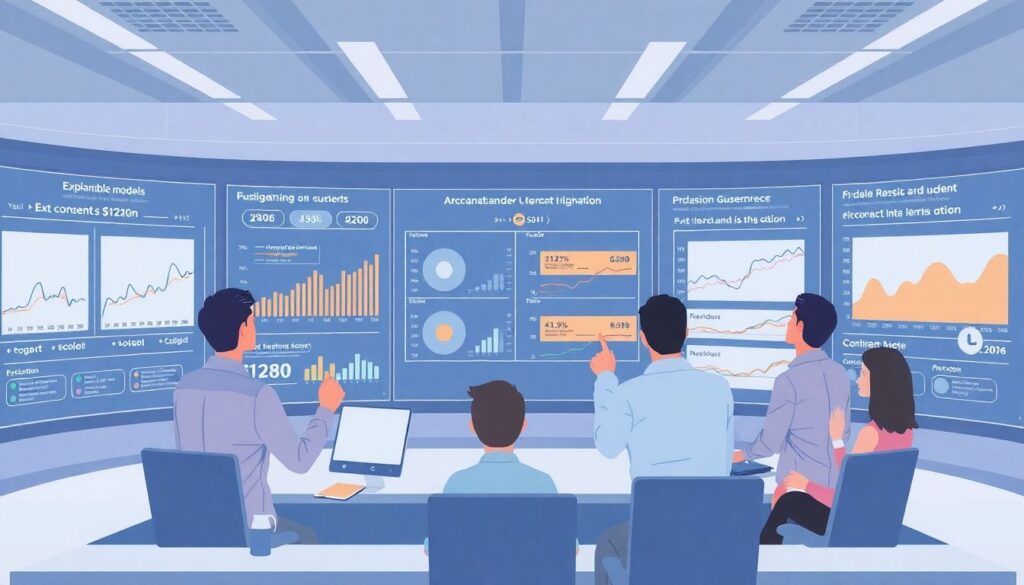
Second key recommendation: position AI as an assistant whose advice can be challenged. That means explainable models where feasible, clear visualizations of uncertainty, and side‑by‑side comparison of options so people can see why the model leans one way. Align incentives too: if project teams are punished for contradicting AI recommendations, you’ve built a technocracy, not participatory governance. Good practice in 2025 is to require AI‑generated briefs for major proposals, but also to log human overrides and learn from them. Over time, your system becomes a dialogue between local knowledge and global data. Several practitioners stress the importance of “governance literacy” workshops: short, practical sessions where community members play through scenarios, challenge model outputs, and practice voting. Adoption rises sharply when people feel the system is legible and negotiable.
If your smartest participants are still defaulting to back‑room email threads, your on‑chain process likely needs simplification.
Trends shaping AI-assisted on-chain governance in 2025
Regulation, interoperability and real-world data
Looking ahead, three trends stand out. First, regulators are moving from curiosity to concrete expectations around digital transparency for climate finance. Large funds are already being nudged toward traceable pipelines from investor capital to project outcomes, which naturally favors on‑chain records plus auditable AI analytics. Second, interoperability is improving: it’s becoming easier to connect an on‑chain governance platform for climate and sustainability to legacy systems like enterprise carbon accounting, MRV tools and national registries of offsets. Third, real‑world data is exploding—satellite, IoT sensors, corporate disclosures—and the challenge is no longer scarcity but reliability. This is pushing teams to invest in data provenance, open standards and “nutrition labels” for AI models themselves so participants can see how conclusions were derived.
These shifts mean governance tools are quietly turning into compliance and reporting infrastructure, not just community playgrounds.
Practical roadmap if you’re starting this year
If you’re considering a pilot in 2025, experts generally advise a staged rollout. Phase one: choose a narrow but meaningful decision domain—like approving micro‑grants for local energy projects—and put the full workflow on-chain, with AI only summarizing proposals and surfacing risks. Phase two: integrate more data sources, such as emissions baselines or credit registries, and let AI recommend rankings or budget splits while humans remain final arbiters. Phase three: selectively automate low‑controversy actions (routine disbursements, parameter updates) with clear escape hatches. Throughout, measure not just technical performance but perceived fairness and clarity. For many organizations, the destination isn’t flashy autonomy; it’s a boring, robust decision pipeline that stakeholders actually trust. Done right, this blend of web3 and AI doesn’t replace governance—it finally gives it the memory, transparency and analytical depth that complex sustainability challenges demand.