
Why autonomous resource allocation suddenly matters
In distributed AI networks you’re juggling GPUs, CPUs, memory, bandwidth and deadlines across cloud, edge and sometimes on‑prem hardware. Manual tuning dies instantly once you hit dozens of models and volatile traffic. That’s where autonomous resource allocation steps in: policies and algorithms decide in real time where each workload should live, how much compute it deserves and when to scale it up or kill it. Think of it as an air‑traffic controller for your models that never sleeps, watching latency, cost, energy and SLAs. The goal isn’t “perfect fairness”, it’s ruthless alignment with business priorities: protect revenue‑critical inference first, then optimize everything else around it.
Real‑world cases: what actually works, not just on slides
A fintech fraud‑detection team plugged an ai resource allocation platform into their pipeline across three regions. Before that they overprovisioned GPUs to avoid false negatives during peak hours. After rolling out autonomous policies based on transaction volume and risk score, the system started shifting heavy graph embeddings to cheaper instances at night, then aggressively pulling them back to premium GPUs during spikes. Result: about 35% cloud savings and lower average latency. Another case: a logistics company built a distributed AI computing infrastructure combining roadside edge boxes with a central cloud. Video analytics for damaged‑goods detection ran at the edge, while retraining happened in the cloud. Their autonomous layer routed only “interesting” frames upstream, cutting bandwidth by an order of magnitude without killing accuracy.
Unobvious design moves experts quietly rely on

Seasoned architects will tell you the magic isn’t just in algorithms, but in the signals you feed them. One underused trick is to inject business value directly into the scheduler: assign a dollar or risk weight to each request type, then let the autonomous workload management software maximize weighted throughput instead of raw QPS. Another non‑obvious move: deliberately keep a tiny “dark reserve” of capacity the allocator can’t touch until it detects anomaly patterns, like traffic from a new region or a sudden model drift. That reserve lets the system spin up safety‑net models or extra monitoring without crashing production. Experts also randomize a small fraction of placement decisions to avoid getting stuck in local optima, then use the data from those “experiments” to improve future allocations.
Alternatives to full autonomy: when less is more
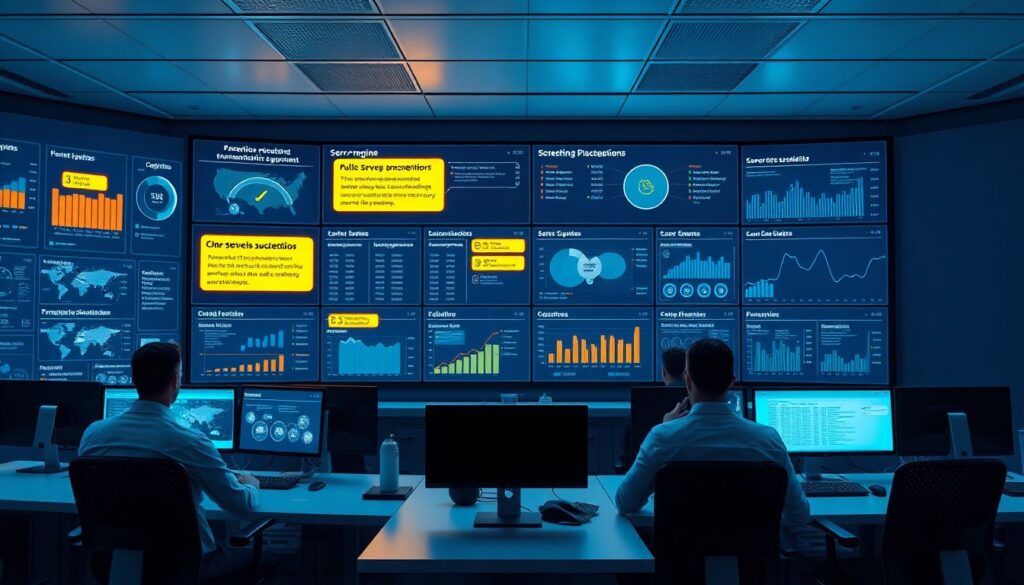
Going all‑in on autonomy isn’t always the smartest first step. Many teams start with a semi‑automatic policy engine that suggests placements, while humans approve or override for critical services. Another pragmatic option is a rule‑driven scheduler augmented with learned cost models rather than a fully RL‑based brain. You can also adopt “tiered automation”: reserve high‑risk actions—like draining an entire region or turning off an expensive GPU class—for manual approval, but automate everyday scaling and migration decisions. Some organizations keep a simple baseline scheduler running in parallel, so if the shiny autonomous system misbehaves, they can fail back quickly. That dual‑lane strategy eases compliance concerns and keeps auditors calmer than a black‑box allocator making every call alone.
Edge orchestration tricks that save your bacon
Once you touch cameras, sensors and retail devices, an edge AI resource orchestration solution becomes a survival tool, not a luxury. Expert advice: never assume stable connectivity; design your allocator so each edge node has a local “mini‑brain” with a trimmed policy cache and compressed models. The central controller should push down only deltas and emergency rules, not full configs on every change. Another pro move is two‑stage inference: run cheap pre‑filters on the edge to throw away 80–90% of junk data, then escalate only the tough cases to the cloud. That design lets you treat bandwidth as a first‑class resource in your allocation logic, right alongside compute and memory, which is crucial for camera fleets and mobile deployments.
Cloud‑native patterns that don’t look obvious at first
In the cloud, people often think more autoscaling groups equal better control, but experts lean toward logical “pools” tuned to distinct latency and cost profiles. Your autonomous layer then picks a pool instead of a raw instance type, which keeps complexity manageable as your landscape explodes. Another subtle trick: treat spot instances as a probabilistic bonus, not a guarantee. The allocator constantly estimates the risk of eviction and assigns only fault‑tolerant training or batch workloads there. When embedded in cloud based distributed ai network services, this pattern lets you chase cheap capacity safely. Also, don’t overlook plain vertical scaling for spiky but predictable tasks; many teams go horizontal by habit and end up spending more on coordination than on actual compute.
Building an ai resource allocation platform that learns
If you’re rolling your own, think of the allocator as a product, not a script. Experts recommend layering it: start with a simple metrics collector (latency, queue depth, GPU utilization, error rates), then a decision engine abstracted from any one cloud, and only then plug into Kubernetes, serverless APIs or custom schedulers. The platform should treat policies as versioned code so you can roll them out gradually and roll back fast when an experiment misfires. Data scientists love when the allocator exposes feedback hooks—like “this batch is more important than it looks”—so their pipelines can nudge the system in real time. Over time, historical allocation logs become training data for predicting future load and pre‑warming capacity instead of constantly reacting late.
Hard‑won pro tips from the trenches
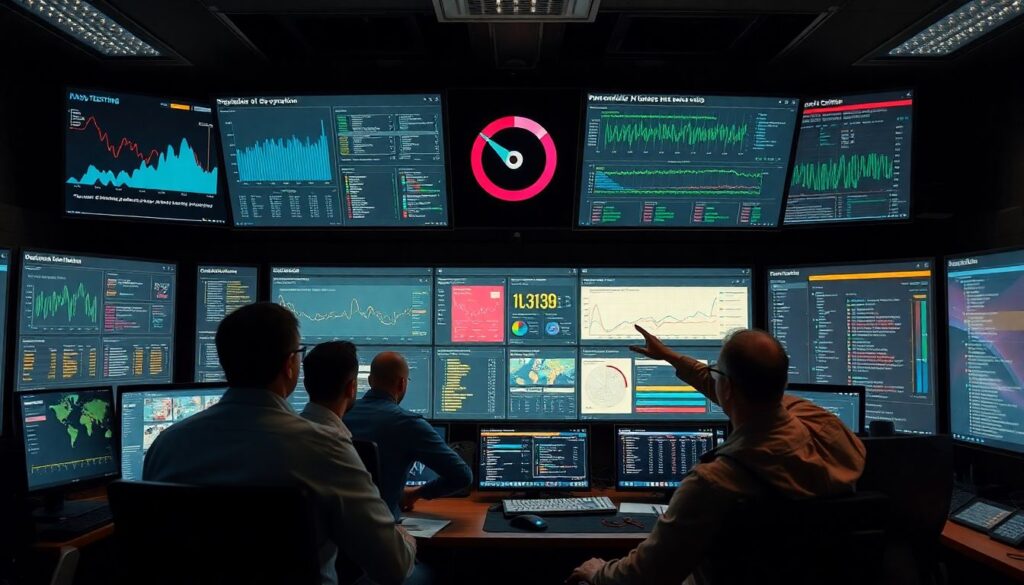
People who’ve been burned by outages will insist on three disciplines. First, chaos testing for the allocator itself: randomly kill nodes, inject bogus metrics, or delay control‑plane messages to see how gracefully it degrades. Second, observability geared to decisions, not just infrastructure—log why the system moved a workload, not only that it did. When dashboards expose these rationales, SREs debug faster and trust grows. Third, tight error budgets linked to allocation actions: if a service burns its budget, the allocator automatically bumps its priority or forces canary rollbacks on new models. Finally, document “runbooks for the robots”: clear guardrails about what the autonomous system may or may not change, so new team members understand how far they can lean on it without losing operational control.