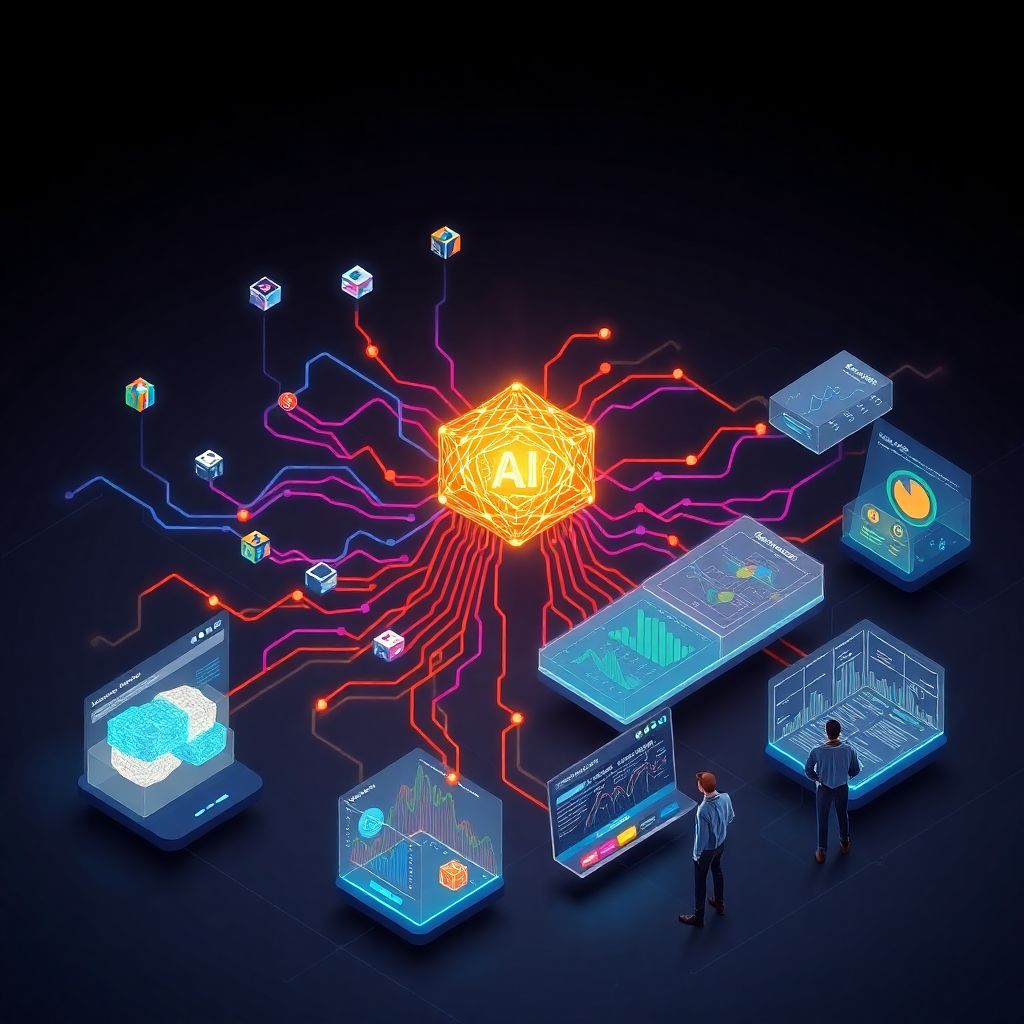
Why AI-assisted blockchain data integration suddenly matters
Blockchain was supposed to make everything “transparent”, yet most teams drown in raw on-chain data. Address clusters, contract calls, logs, bridges, sidechains — turning this chaos into something a CFO, regulator or product manager can read is hard. That’s where an AI powered blockchain analytics platform changes the game: models clean, enrich and connect data from dozens of chains, then surface it in plain dashboards or APIs. Instead of hiring a small army of data engineers and Solidity experts, companies let AI handle parsing, labeling and anomaly detection, and humans focus on strategy, compliance and products rather than byte-level debugging of transaction traces.
How AI actually tames on-chain chaos
Under the hood, AI-assisted blockchain data integration is less magic and more disciplined data engineering with smarter algorithms on top. First, data pipelines stream blocks, mempool events and off-chain references (like price feeds or KYC outcomes). Then machine learning models label wallet types, detect contract patterns and infer relationships between addresses. Modern AI tools for on chain data integration also use embeddings to understand semantic similarities between smart contracts, so a new DeFi protocol can be auto-classified by behavior. NLP models parse governance forums, GitHub issues and even legal documents, linking them to the relevant on-chain entities in a single knowledge graph.
Numbers, market size and where the growth comes from
According to MarketsandMarkets, the blockchain analytics market is projected to grow from roughly $0.5–0.7B in 2023 to over $4B by 2030, with double-digit annual growth. A big slice of this comes from enterprise blockchain data integration solutions that must handle not just public chains, but also permissioned ledgers and legacy databases. Chainalysis, Nansen, TRM Labs and similar vendors report that institutional customers already account for the majority of their revenue, while DeFi-native funds and DAOs are catching up. As more value moves on-chain — tokenized treasuries, carbon credits, invoices — the economic incentive to understand and integrate that data rises sharply.
Economic logic: from sunk costs to compounding insights
From a CFO’s perspective, AI-assisted integration is about converting messy streams of blocks into an asset that compounds over time. Traditional blockchain data integration services for businesses often meant bespoke ETL projects that aged badly as protocols upgraded. AI-driven systems continuously retrain on new contracts, standards and attack patterns, so maintenance costs fall relative to manual approaches. Firms report rough savings of 30–50% on data engineering hours once they standardize pipelines and let models handle labeling. More important than cost-cutting, though, is opportunity cost: faster analytics means quicker listing decisions, better risk limits and earlier detection of protocol traction before competitors notice.
Real-world case: compliance and fraud detection

One of the clearest success stories is in AML and compliance. Chainalysis and TRM Labs use machine learning to cluster addresses that likely belong to the same entity, flag mixers or sanctioned actors and score transaction risk. In one well-publicized case, an exchange used such tooling to identify a laundering network moving funds through dozens of DeFi pools; AI models surfaced suspicious routing patterns that simple rules would miss. The result: faster SAR filings, fewer false positives and less manual review work. Regulators, in turn, increasingly expect licensed platforms to rely on this type of AI-assisted tracking rather than purely manual investigations.
– Key benefits here:
– Faster detection of illicit flows and scams
– Lower manual investigation workload
– Stronger evidence trail for regulators and courts
Real-world case: DeFi risk engines and portfolio intelligence
On the DeFi side, protocols like Aave work with risk firms such as Gauntlet, which build simulation and ML models on integrated on-chain data. These models digest liquidation events, oracle deviations, LP behavior and governance decisions across multiple chains to recommend collateral factors and caps. Nansen, meanwhile, combines labeled wallets with behavioral clustering so funds can track “smart money” flows: when a cluster of historically profitable addresses moves into a new token, the signal appears on their dashboards within minutes. Without integrated and cleaned data, these strategies would be guesswork; AI turns them into systematic, repeatable processes rather than anecdotal “alpha hunting”.
Enterprise case: supply chains and tokenized assets
In the enterprise world, food and pharma supply chains are early adopters. Projects inspired by IBM Food Trust, for instance, log production batches, shipping events and quality checks on permissioned blockchains. AI models match those on-chain events with sensor data, invoices and ERP records to detect discrepancies — say, a “cold-chain” shipment whose temperature logs don’t match the declared route. Some banks piloting tokenized invoices and trade finance use similar integration to connect blockchain events with core banking systems, pricing credit risk in near real time. These setups essentially behave like enterprise blockchain data integration solutions wrapped around existing IT, rather than replacing it.
– Typical enterprise goals:
– End-to-end traceability with automated audits
– Faster settlement and fewer disputes
– Better credit and counterparty risk assessment
Tools, stacks and “best software” questions
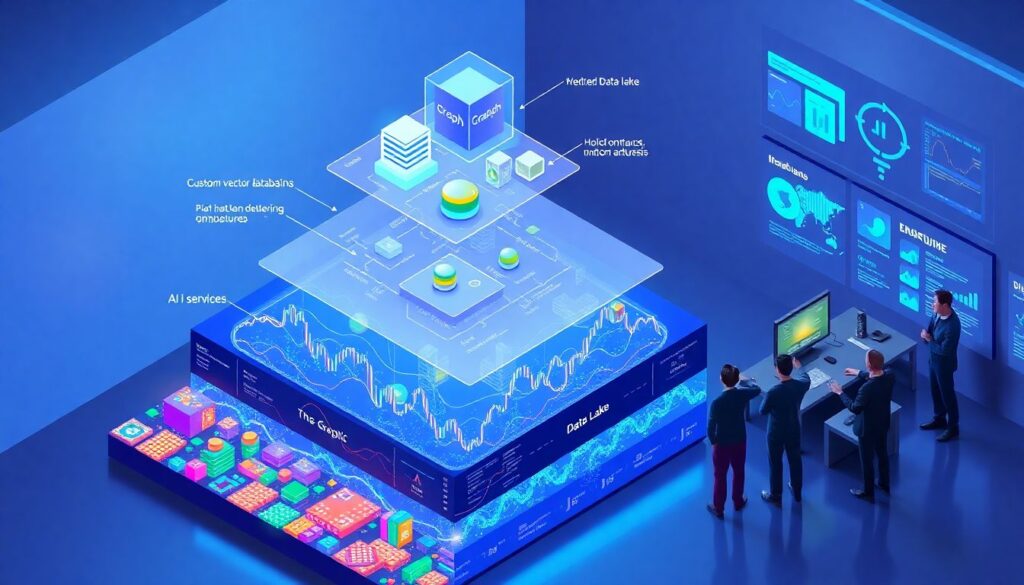
Teams often ask for the best blockchain data analytics and integration software, hoping for a single silver bullet. In practice, stacks are layered: indexers like The Graph or custom ETL jobs feed data lakes; vector databases store embeddings of contracts and addresses; and AI services sit on top for clustering, anomaly detection and natural language querying. Some vendors offer full “AI powered” stacks, others provide specialized modules plugged into existing BI tools like Snowflake or Power BI. The winning pattern so far is modularity: keep raw data portable, let AI services compete on top and avoid vendor lock-in that prevents you from adapting to new chains and data types.
Limits, risks and how to use these systems responsibly
AI doesn’t magically fix bad data. On-chain records can be incomplete, censored or ambiguous; off-chain oracles can be compromised; and labels may be biased toward Western compliance definitions. Overreliance on AI tools for on chain data integration can create false confidence if teams stop sampling raw transactions and validating models. Good practice is to combine automated scoring with explainability: show which paths, addresses or contract calls triggered an alert. Governance also matters: DAOs and enterprises should document how blockchain data informs decisions, who can override AI outputs and how users can contest mislabeling, especially in contexts like AML where mistakes have legal and reputational consequences.
Looking ahead: forecasts and strategic implications
Analysts expect that within 5–7 years, most serious crypto projects and data‑driven enterprises will treat integrated on-chain data as basic infrastructure, much like logs or CRM events today. As tokenization spreads to real-world assets, regulators are likely to push standardized reporting interfaces based on AI-assisted analytics. For businesses, the strategic question shifts from “Should we touch crypto?” to “How do we fold these signals into pricing, risk and product design?” Those who invest early in robust, AI-assisted integration will not just reduce compliance pain; they’ll gain a dynamic map of value flows across the global economy — one that updates block by block.