
Historical context of autonomous regulatory analytics
From manual reporting to scripted automation

For a long time regulatory reporting lived in spreadsheets and email threads. Analysts manually pulled numbers from core banking systems, checked them line by line and hoped they matched the latest rulebook. Early automation mostly meant macros and simple scripts that assembled static files at month‑end or quarter‑end. It was fragile and slow, but at least better than retyping columns by hand. The idea that regulatory reporting software real time could exist sounded unrealistic, because neither the data pipelines nor the supervisors were ready to consume streaming information instead of neatly packaged periodic reports.
The push from crises and new regulations
After the global financial crisis, supervisors started asking much tougher questions: not only “What is your risk?” but “How quickly can you prove it?” Basel III, stress testing and granular transaction reporting forced banks to rethink their tooling. Regulatory teams suddenly needed to slice positions by counterparty, currency, maturity and scenario on demand. Vendors tried to respond with more powerful automated regulatory compliance reporting solutions, yet most of them still worked in big nightly batches. The gap between how fast markets moved and how slowly reports were produced became painfully obvious, especially during volatility spikes.
Arrival of big data and streaming infrastructure
The turning point came when big data platforms and message queues became mainstream in finance. Trading desks were already using them for low‑latency pricing, and technologists started asking why regulatory teams were stuck in yesterday’s architecture. If you can stream quotes and orders, you can in principle stream risk metrics and compliance indicators as well. That is how the first prototypes of a real time risk and regulatory reporting platform appeared: they reused market data infrastructure, added regulatory logic on top and exposed dashboards for risk and compliance officers. The culture, however, still needed to catch up with such transparency.
From dashboards to autonomous behaviors
Once firms learned to calculate metrics continuously, the next question was obvious: can the system not only show a breach but also suggest or trigger a response? This is where the notion of autonomous analytics entered the conversation. Instead of a dashboard that refreshes every few seconds, you have a layer that interprets the numbers, compares them with thousands of evolving rules and proposes actions, such as adjusting limits or escalating alerts. In parallel, supervisors began experimenting with machine‑readable rules, which further encouraged banks to build platforms capable of reacting in near real time, not just reporting after the fact.
Basic principles of autonomous real‑time analytics
Reliable data pipelines and shared definitions
Autonomous analytics stands on a simple but stubborn foundation: clean, timely and well‑defined data. If positions, customers and risk factors are mapped differently in each system, no fancy algorithm will save the day. Modern setups stream transactional and reference data into a common layer, enrich it with consistent identifiers and apply standardized calculation logic. Only then can analytics engines compute exposure, capital or liquidity metrics on the fly. In practice this means treating regulatory data with the same engineering discipline as trading data, including versioned schemas, automated quality checks and reproducible transformations across the entire reporting chain.
Rules, models and continuous evaluation
On top of the data layer lives a fabric of rules and models. Traditional compliance rules describe thresholds and eligibility criteria, while statistical and machine learning models estimate probabilities, patterns and anomalies. Autonomous analytics combine both: they evaluate deterministic conditions and contextual signals in one pass. The system does not just ask whether a ratio breached a limit; it also considers trends, peer behavior and historical responses. Crucially, each evaluation is logged with full lineage, so teams can reconstruct why a certain alert fired or why an automated recommendation was made at a particular moment.
Human‑in‑the‑loop as a design feature
Despite the “autonomous” label, people remain deeply involved. The goal is not to eliminate compliance officers but to let them focus on judgment rather than data wrangling. A mature real time risk and regulatory reporting platform usually allows humans to configure guardrails, approve model changes and override suggestions with clear justification. Feedback from these decisions then flows back into the learning process. Over time, thresholds, weights and alert logic adapt to the institution’s actual risk appetite and supervisory feedback, creating a dynamic balance between automation and accountable human oversight.
Explainable and auditable intelligence
Regulatory work leaves no room for black boxes. Any ai powered regulatory analytics for financial institutions must provide explanations that a non‑technical regulator can follow. This pushes architects toward techniques that can expose feature importance, decision paths and alternative scenarios. For example, instead of saying “alert triggered with risk score 0.82,” an autonomous system might show that an exposure increase, liquidity drop and unusual trade pattern jointly exceeded internal tolerance. Audit trails preserve every input, intermediate metric and output, making it possible to replay the decision months later during an inspection or an internal investigation.
Comparing approaches to real‑time regulatory reporting
Batch automation versus real‑time streaming
One common fork in the road is choosing between smarter batch processes and fully streaming architectures. Enhanced batch automation improves existing overnight and intraday jobs, squeezing more performance and reliability from familiar tools. It is cheaper to adopt and disrupts current operations less, but still leaves blind spots between runs. Streaming approaches, by contrast, treat each transaction and event as a first‑class citizen, updating metrics continuously. They demand more investment in infrastructure and skills, yet they shine during stress events, when waiting for the next batch can mean reporting outdated or misleading figures to supervisors.
Reporting engines versus autonomous analytics layers
Many institutions start by deploying classic reporting engines that optimize data aggregation and template generation. These tools excel at producing forms exactly in the regulator’s format but do little to interpret the numbers. Autonomous analytics add a diagnostic and prescriptive layer on top, asking “why is this happening?” and “what could we do now?” instead of just “what is the value?” In practice, a hybrid model often works best: a stable reporting core ensures consistency, while an intelligent layer monitors behavior in real time, detects emerging issues and feeds summarized insights back into the formal submissions.
Rule‑centric systems versus learning systems
Another dimension of comparison is the reliance on static rules versus adaptive models. Pure rule‑based engines are transparent and predictable; every condition is written down and easy to test. However, they struggle with complex patterns, such as subtle collusion between accounts or evolving market abuse strategies. Learning systems, on the other hand, can detect anomalies and correlations that humans did not specify explicitly. The trade‑off lies in governance: firms must decide where strict rules are mandatory for compliance purposes and where probabilistic signals can safely assist analysts without becoming the sole basis for regulatory decisions.
Monolithic platforms versus embedded micro‑services
Architecturally, some banks gravitate toward a single vendor solution that claims to cover data ingestion, calculation, analytics and disclosure in one stack. Others prefer a mesh of smaller services that embed autonomous compliance monitoring and reporting tools into existing business platforms. Monoliths can be easier to manage from a procurement and responsibility perspective, but they may lock institutions into rigid workflows and slow upgrade cycles. Micro‑services demand stronger internal engineering, yet offer flexibility to swap components, test new analytical engines and gradually expand real‑time capabilities across trading, treasury, retail and corporate banking environments.
Practical examples of implementation
Intraday market risk and trade surveillance
Consider a capital markets desk that used to calculate regulatory market risk capital once a day. During volatile periods, the official number lagged reality by hours. By streaming trades, quotes and positions into a central analytics hub, the bank can now recompute sensitivities and value‑at‑risk every few minutes. The autonomous layer watches for concentration increases, liquidity deterioration or breaches of stress limits and raises alerts immediately. At the same time, trade surveillance logic monitors behavior against conduct rules, reducing the chance that problematic activity goes unnoticed until the next formal report is generated for supervisors.
Liquidity and resolution planning in retail banking

In retail and commercial banking, regulators focus heavily on liquidity coverage and recovery plans. A cloud‑based, real time risk and regulatory reporting platform can continuously track inflows, outflows and contingent funding across branches and digital channels. When early warning indicators flash, the autonomous analytics engine simulates scenarios such as deposit runs or credit line drawdowns. It then suggests actions like adjusting pricing, activating contingency funding or rebalancing portfolios. Because the same data feeds both daily management dashboards and official regulatory returns, the bank reduces reconciliation efforts and increases confidence that decisions rest on consistent, timely information.
Cross‑jurisdictional reporting for global groups
Global institutions often face overlapping regimes where the same exposure must be reported in different formats. Here, a flexible platform acts as a translation and prioritization layer. It maps internal data once, then derives jurisdiction‑specific metrics and thresholds. When a rule changes in one country, the system flags which data elements and calculations are impacted across the group. Over time, autonomous analytics learn which portfolios and entities tend to trigger the most issues, prompting local teams to adjust booking models or hedging strategies before problems cascade into large‑scale remediation programs and tense discussions with supervisors.
Vendor platforms versus in‑house frameworks
In real projects, organizations rarely choose a purely bespoke or purely off‑the‑shelf path. Vendor products accelerate delivery of core features like templates, validations and workflows; they essentially provide the backbone of regulatory reporting software real time capabilities. In‑house teams then extend this backbone with institution‑specific analytics, legacy integrations and experimental models. When evaluating automated regulatory compliance reporting solutions, banks increasingly check whether the vendor architecture allows them to plug in custom machine learning modules, adjust data ontologies and export granular audit logs, rather than locking advanced analytics into opaque black‑box appliances.
Common misconceptions and pitfalls
Myth of full replacement of compliance teams
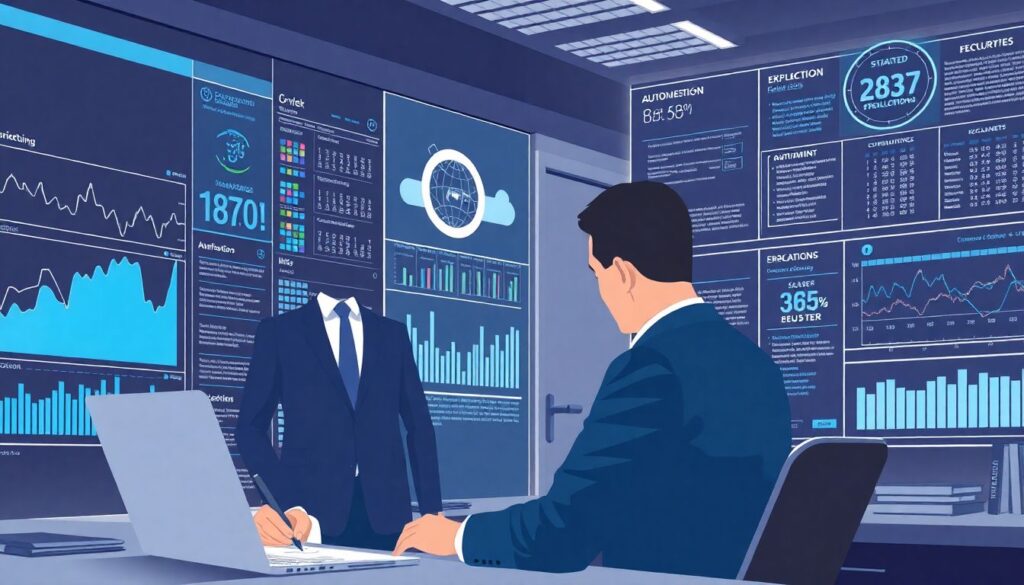
One stubborn misconception is that autonomous analytics will make compliance departments obsolete. In reality, regulatory expectations around accountability push in the opposite direction. Tools can surface patterns, prioritize cases and draft explanations, but someone still signs off on interpretations and remediation plans. When ai powered regulatory analytics for financial institutions work well, they make experts more effective, not redundant. The risk lies in “automation bias,” where staff trust the system too much and stop questioning odd outputs. Successful programs explicitly train users to treat analytics as decision support, backed by clear escalation channels.
“Once‑and‑done” implementation mindset
Another pitfall is viewing the deployment of new platforms as a one‑time project. Regulations, products and customer behaviors change constantly, which means models, thresholds and even data definitions must evolve. If a bank implements a real time risk and regulatory reporting platform and then freezes it for five years, the gap between its calculations and the regulator’s intent will widen. Governance frameworks should treat analytics like living organisms: regularly reviewed, retrained and retired when obsolete. This includes maintaining documentation, monitoring model drift and preserving the ability to run back‑tests against past crises and regulatory feedback.
Overconfidence in vendor labels and buzzwords
Marketing language around automated regulatory compliance reporting solutions can create a false sense of maturity. Phrases like “out‑of‑the‑box AI” or “self‑driving compliance” sound appealing but hide trade‑offs in data quality, configurability and explainability. Institutions sometimes discover late in the process that the product assumes a data model very different from their own, or that “AI” boils down to fixed heuristics. To avoid disappointment, teams need to run realistic pilots with messy data, stress‑test performance under peak loads and verify that explanations produced by the system align with what regulators actually consider credible and transparent.
Ignoring culture and cross‑functional collaboration
Finally, technology alone cannot deliver trustworthy autonomous analytics. Risk, compliance, IT and business lines must agree on shared objectives and vocabulary. If quants design sophisticated anomaly detectors but compliance officers distrust them, the system will gather dust. Conversely, if business pressure focuses solely on cost cutting, the subtle benefits of earlier risk detection and smoother supervisory relationships may be undervalued. The most durable autonomous compliance monitoring and reporting tools emerge where institutions treat regulatory analytics as a strategic capability, invest in training and create forums where modelers, engineers and policy experts iterate together over the long term.