
Why blockchain ventures suddenly care about AI analytics
If you talk to founders running web3 projects today, you’ll notice a common shift: nobody wants to “fly blind” anymore. Teams are realizing that wallets, on-chain transactions and community behavior together form a huge data exhaust that can be turned into an actual competitive edge. That’s where ai powered blockchain data analytics comes in. Instead of a few dashboards with token price and TVL, ventures now expect full ecosystem visibility: who their real users are, how capital flows between protocols, which campaigns bring sticky wallets, and where risks are quietly building up in their smart contracts and liquidity pools.
Что такое AI‑powered ecosystem analytics в простых словах
At its core, ecosystem analytics means you stop looking only at your own smart contracts and start viewing the whole network of users, dApps, bridges, CEX/DEX flows and even off-chain signals as one living organism. AI adds the ability to link those pieces automatically. A modern blockchain analytics platform for startups might ingest on-chain data, Discord and Telegram activity, GitHub commits and market feeds, then use models to tag wallets, cluster user journeys and flag abnormal patterns. The result isn’t just “more charts” but narrative-level insights like: “your NFT minters are power DeFi users from Optimism, not retail newcomers.”
Цифры: насколько велик рынок и объем данных
По оценкам Messari и Electric Capital, количество активных разработчиков в web3 за последние пять лет выросло более чем в два раза, а число уникальных адресов — до сотен миллионов. При этом объем ончейн‑транзакций в крупных сетях давно переваливает за миллиарды операций в год. Такой масштаб невозможно осмыслить вручную, и именно здесь crypto ecosystem analytics software становится базовой инфраструктурой. Аналитические компании уже оперируют петабайтами исторических данных, а расчеты показывают, что к 2030 году этот объем вырастет в несколько раз из‑за L2‑решений и модульных блокчейнов.
Forecasts: where ecosystem analytics is heading
Most research firms expect the broader crypto data and analytics market to grow at double‑digit CAGR this decade as institutional money and regulation both tighten the screws on transparency. The interesting twist is that spending is shifting from generic “compliance dashboards” to ecosystem‑wide intelligence. Investors increasingly expect teams to use blockchain venture analytics tools not only for reporting but for strategy: selecting chains, optimizing incentive programs, and predicting churn. Over the next 3–5 years, you can expect AI systems that simulate “what if we change tokenomics this way?” using historical behavior of millions of wallets as their training set.
Economic angles: how AI analytics changes venture economics
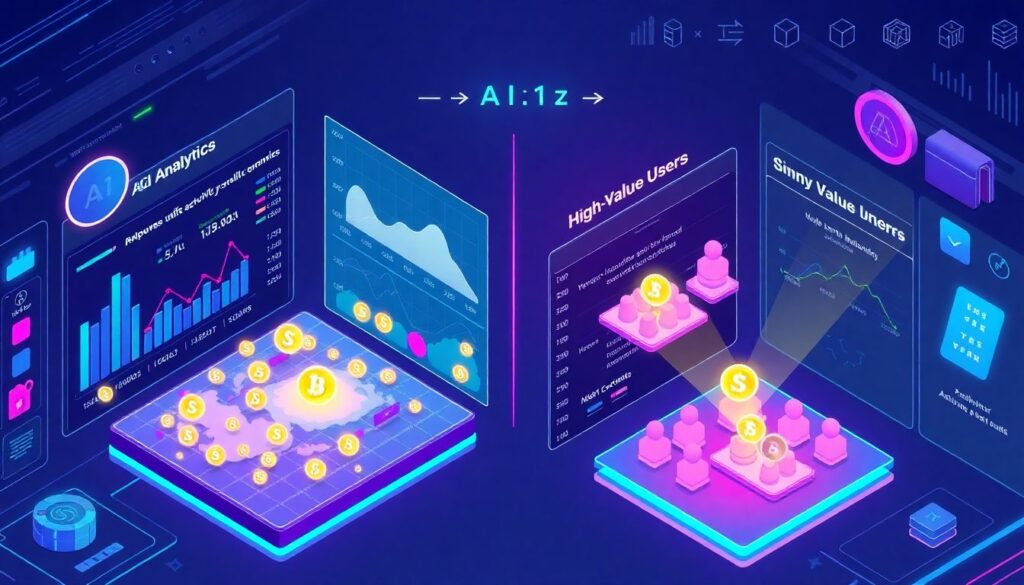
From a purely economic standpoint, AI‑driven analytics changes the unit economics of a blockchain product. Instead of burning tokens on broad, blind airdrops, a project can identify clusters of wallets that historically become high‑value users and focus incentives there. One DeFi protocol reported that optimizing liquidity mining based on behavioral cohorts cut incentive spend by ~35% while keeping TVL stable. For funds, using a web3 data analytics platform to evaluate early‑stage ventures turns subjective narratives into measurable patterns: dev activity, user stickiness, capital retention and cross‑protocol composability all become quantifiable investment signals.
Five ways ventures actually use AI ecosystem analytics
1. Map real user journeys across multiple chains and dApps, discovering where value is truly created and lost.
2. Detect wash‑trading, Sybil attacks and airdrop hunters before they drain community budgets.
3. Benchmark token and protocol health versus sector peers using standardized on‑chain KPIs.
4. Run scenario analysis on governance changes or parameter tweaks before pushing them on‑chain.
5. Identify new markets by spotting organic usage from unexpected regions, wallets or partner protocols.
Case 1: DeFi protocol that fixed its “leaky bucket”
Consider a mid‑size lending protocol on a major L2 that felt stuck: TVL was high, but fee revenue barely grew and incentive spend was painful. They plugged into a crypto ecosystem analytics software solution that clustered wallets by behavior, not just deposit size. AI models found that many “whales” were mercenary farmers rotating capital on a weekly basis, while a smaller group of mid‑size wallets behaved like loyal users across multiple DeFi platforms. By reallocating rewards toward this second segment, and tweaking interest curves tested in simulation, the protocol saw fee revenue grow ~20% in a quarter with fewer tokens emitted.
What changed inside the team
The interesting side‑effect was organizational. Before, product, risk and growth teams argued using different numbers pulled from ad‑hoc dashboards. After adopting an integrated web3 data analytics platform, they had a shared “single source of truth” about wallets, flows and risks. AI‑generated risk scores on borrowers helped risk managers justify conservative settings for certain markets, while growth teams could clearly show which campaigns brought sustainable liquidity. Over time, many routine analytics questions became self‑serve, freeing data scientists for deeper modeling instead of endless manual report building.
Case 2: NFT gaming startup that avoided a bad launch
An NFT gaming startup planning its token launch used a blockchain analytics platform for startups that specialized in gamer behavior. The team assumed their core audience came from traditional gaming with minimal DeFi experience. Machine‑learning models, however, linked pilot users’ wallets to active on‑chain histories: most early testers were already heavy DEX and NFT users. Analytics showed they were comfortable with complex DeFi flows but sensitive to gas fees and network congestion. Armed with this ecosystem‑wide view, the team moved from mainnet to an L2, simplified early quests and delayed certain token‑gated features until infrastructure was ready.
The economic impact of better timing
Because launch decisions were informed by detailed ecosystem analytics instead of gut feeling, the game avoided a common trap: expensive airdrops to short‑term speculators. AI models identified wallets that historically flipped gaming tokens quickly, and the team limited high‑value rewards to players with longer‑term engagement patterns in similar projects. Result: a smaller but more committed early holder base and far less sell pressure in the first weeks. Investors later noted that such data‑driven decisions were a key reason they were willing to lead the next round at a higher valuation.
Case 3: Venture fund building a live “heat map” of web3

One more example: a VC fund created an internal ai powered blockchain data analytics stack to track early traction across chains. Instead of waiting for pitch decks, they watched developer activity, contract deployments, unique active wallets and liquidity flow into new protocols. Their in‑house crypto ecosystem analytics software flagged patterns like “unusual growth in smart‑account usage on this emerging L2” or “consistent retention of users bridging from specific rollups.” That allowed the fund to contact founders earlier, negotiate better terms and avoid projects where growth was mostly inorganic or bot‑driven.
How tools shape deal selection
For this fund, ecosystem analytics wasn’t just a fancy dashboard; it reshaped their investment thesis. With granular data on protocol interdependence, they could see when a new primitive truly unlocked value versus simply cannibalizing others. They leaned heavily on blockchain venture analytics tools to rank opportunities by network effects: how many other projects integrated with a protocol, how sticky those relationships were, and how capital reacted to shocks. Over a few years, their portfolio skewed toward infra and middleware they could objectively see becoming systemic, instead of hyped but isolated apps.
Impact on the broader blockchain industry
As more ventures adopt serious analytics, the industry slowly moves from narrative‑driven cycles to evidence‑driven iteration. Public dashboards based on ai powered blockchain data analytics push teams toward better disclosure: it’s harder to hide wash‑trading, fake users or unsustainable yields. Regulators and institutions also benefit from greater transparency, which can accelerate mainstream adoption. At the same time, protocols that lean into open data and composable analytics APIs tend to attract more integrators, creating positive feedback loops. In a sense, analytics becomes a public good that underpins healthier competition and more robust token economies.
Looking ahead: from dashboards to autonomous agents
The next frontier is moving from descriptive analytics to semi‑autonomous decision systems. Imagine treasury management bots that monitor cross‑chain liquidity conditions and automatically rebalance protocol reserves within governance‑approved limits, or marketing agents that spin up and retire incentive programs based on real‑time user cohort performance. These systems will sit on top of the same web3 data analytics platform foundations we’re building now, but with tighter loops between insight and action. Teams that start treating data and AI as part of their core product, not a reporting afterthought, are likely to define the next generation of resilient blockchain ventures.
Wrapping up: how to get started without overkill
For early‑stage teams, the biggest trap is thinking you need an enterprise‑grade stack on day one. In practice, a lean setup using a hosted blockchain analytics platform for startups, plus someone who can ask the right questions, already beats flying blind. Start with a few key hypotheses—who your real users are, what drives retention, where capital is leaking—and test them using available on‑chain and off‑chain data. As your protocol and community grow, you can layer in more advanced ai powered blockchain data analytics and, eventually, build your own crypto ecosystem analytics software tailored to your niche. The important part is to let data, not just vibes, shape your next move.