
Why AI‑powered monetization for NFTs matters in 2025
If you’ve been around crypto or digital art since the 2021–2022 hype cycle, you’ve seen NFTs go from JPEG mania to a quieter, more utility‑driven phase. By 2025 the wild speculation cooled off, regulators stepped in, and many collections are basically ghost towns. But something interesting happened in the background: AI stopped being just a buzzword and started to reshape how value is created, priced, and shared in these NFT ecosystems.
Instead of “mint and pray” drops, we’re seeing AI‑driven revenue systems that look much closer to SaaS, gaming economies and streaming platforms. To make sense of that, we’ll walk through clear definitions, architecture diagrams (in text), comparisons with Web2 analogs, and concrete examples of how these AI‑powered monetization models actually work in practice.
Key terms you actually need
Basic concepts
Before diving into models, let’s make sure the vocabulary is precise, because in 2025 these terms get thrown around loosely.
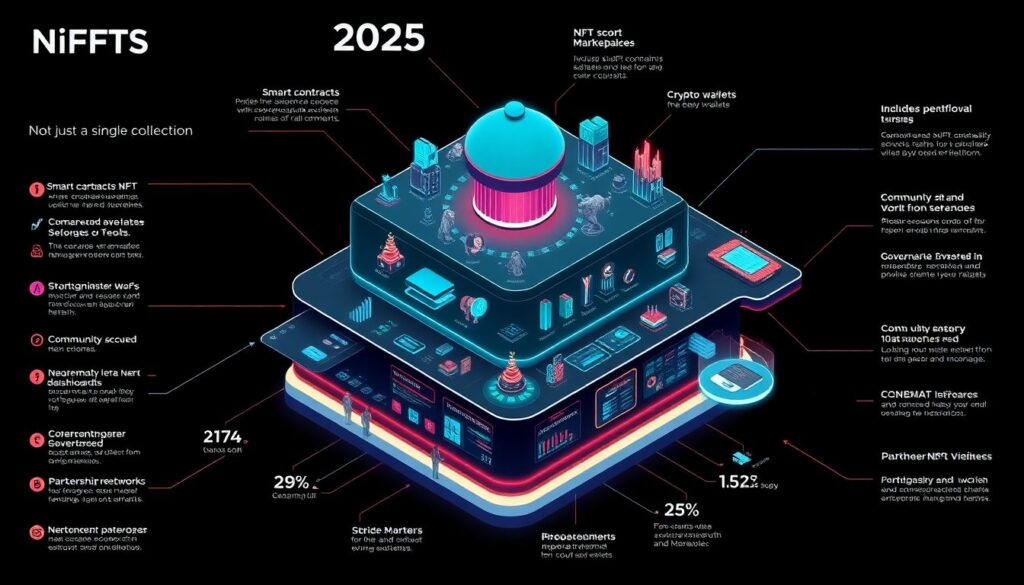
– NFT ecosystem – неt just a collection, but the whole stack: smart contracts, marketplaces, wallets, community tools, on‑chain and off‑chain data feeds, governance, and partner integrations built around specific NFTs or brands.
– AI‑powered monetization model – a structured way to generate and distribute revenue using machine learning or generative AI at one or more stages: pricing, recommendation, content generation, dynamic royalties, or automated negotiation.
– nft monetization platform – an end‑to‑end infrastructure (on‑chain + off‑chain) that lets creators and brands plug in AI modules for pricing, analytics, recommendation and royalty logic, instead of coding everything from scratch.
– ai nft marketplace solutions – marketplaces or white‑label stacks where the core marketplace flows (search, discovery, bidding, royalties, bundled sales) are enhanced or automated by AI components.
These definitions matter because the moment AI becomes part of the logic that sets price, exposure and payout, you’re not just “adding analytics” — you’re redesigning the revenue engine of the whole NFT ecosystem.
A short history: from static JPEGs to dynamic AI agents
2020–2022: One‑shot sales and flat royalties
In the first wave, monetization was simple and very Web1:
– Primary sale: mint, hype on Twitter, sell out if lucky.
– Secondary market: a fixed royalty percentage hard‑coded in the contract.
– Pricing: mostly vibes, scarcity narratives, and influencer tweets.
AI was barely in the picture. A few projects tried ML‑based rarity scores, but it didn’t meaningfully change how money flowed. Revenue models were:
– One‑off mints
– Flat royalties on secondary trades
– Occasional airdrops to keep the community warm
No dynamic pricing, no usage‑based billing, no adaptive royalty logic.
2023–2024: Analytics and recommendation creep in

As the speculative volume dropped, builders started asking: *how to monetize nft collections with ai* in a more sustainable way? That’s where the first generation of ai powered nft analytics tools appeared. They focused on:
– Floor price prediction and volatility scoring
– Wallet segmentation (diamond hands vs. flippers vs. brand fans)
– Rarity‑adjusted pricing suggestions
– Fraud / wash‑trading detection
Think of these tools as “Google Analytics for NFTs, with ML on top”. They didn’t radically change the revenue model yet, but they started nudging creators to:
– Adjust drop sizes and times based on forecasted demand
– Offer targeted discounts or allowlists to high‑value segments
– Auto‑flag abusive trading patterns to protect royalties
This first wave felt very similar to e‑commerce analytics in the 2010s — useful, but mostly advisory.
2024–2025: AI moves into the transaction loop
In the last two years, the shift has been from *analytics about NFTs* to *AI inside NFT logic itself*:
– Generative AI creates dynamic NFT states (new art frames, audio layers, personalized assets).
– Reinforcement learning agents optimize pricing and access tiers in real time.
– On‑chain oracles feed usage data into smart contracts to update royalties and rev‑share.
At this point, NFT monetization stops being a static rule set and starts to look like a continuously learning system. That’s the era of truly AI‑powered monetization models for NFT ecosystems.
Conceptual architecture: where AI sits in the stack
High‑level data flow
Imagine a typical ai nft marketplace solutions setup in text‑diagram form:
“`
[Users & Wallets]
│
▼
[Marketplace UI / Game / App]
│ ▲
│ │
▼ │
[AI Layer: Pricing, Recommender, Risk, Personalization]
│
▼
[Smart Contracts: Mint, Trade, Royalty, Access Logic]
│
▼
[Blockchains & Storage (L1/L2, IPFS, Arweave, etc.)]
│
▼
[Data Lake & Feature Store (off-chain events, logs)]
▲
│
[Training Pipelines & Feedback Loops]
“`
AI sits between user interactions and smart contract calls, and also in the back office where models are trained and updated. The key design tension is:
– What stays on‑chain (transparent but rigid, expensive to change)
– What stays off‑chain (flexible, updatable, but less trustless)
Monetization models emerge from how you wire these pieces together.
Core AI‑powered monetization models
1. Dynamic pricing engines
Instead of fixed mint prices or manual listing decisions, AI models adjust prices based on:
– Historical trades, floor movements, and macro market data
– Real‑time demand signals (clicks, watchlists, bids, social mentions)
– Seller’s objectives (sell fast vs. maximize revenue, minimize volatility)
A typical flow looks like this:
1. User lists or prepares to mint an NFT.
2. Pricing model estimates reservation price and optimal listing window.
3. System proposes a price curve (e.g., Dutch auction with parameters learned from similar drops).
4. Model continuously updates recommendations as bids and views come in.
This is similar to airline ticket pricing, but with crypto‑native constraints: gas fees, latency, and on‑chain transparency.
Compared to Web2 analogs:
– Like Uber surge pricing, but more auditable and sometimes partially on‑chain.
– Unlike eBay, where most intelligence lives in user strategy rather than platform‑side ML.
2. Usage‑based and performance‑based royalties
Static 5–10% royalties have two problems: buyers hate paying them in bear markets, and they don’t reflect actual value generation. AI opens up *adaptive royalty schemes*:
– Usage‑weighted royalties – the more an NFT is used in a game, metaverse, or content pipeline, the higher the payout to the original creator or brand.
– Performance‑based royalties – if an NFT‑gated experience hits certain KPIs (views, conversions, time‑spent), the smart contract adjusts rev‑share proportions.
To do this, you need models that:
– Attribute usage or revenue back to specific NFTs or collections.
– Detect manipulation (fake traffic, scripted usage).
– Estimate fair rev‑share even when multiple assets contribute jointly.
In text‑diagram form, a usage‑based royalty loop:
“`
[User actions in apps/games]
│
▼
[Event stream → Attribution model]
│
▼
[Value scores per NFT / wallet]
│
▼
[Royalty calculation engine]
│
▼
[On-chain payout via smart contracts]
“`
This is where nft revenue models for creators and brands start to resemble affiliate marketing plus streaming royalties, powered by AI attribution instead of simple transaction counts.
3. AI‑driven subscription and access models
Not every community wants speculative flips. Some want recurring, predictable cash flow. Think of:
– Hold X tokens → access to AI tools, courses, or media.
– Stake NFTs → unlock higher‑tier features or early access.
– Dynamic tiers adjusted by engagement, not just wallet balance.
AI helps by:
– Scoring users on multi‑dimensional engagement (on‑chain, off‑chain, social).
– Predicting churn and recommending targeted perks or discounts.
– Optimizing how many NFTs or what combination qualifies for each tier.
This is almost identical to SaaS monetization, but NFTs replace user accounts and licenses. AI glues it together by continuously recalculating who should see what and at what price point.
4. AI‑native content monetization
With generative models maturing, some NFTs are no longer static assets; they are *interfaces to an AI model*. Examples:
– Character NFTs that act as AI agents in games and chats.
– Music NFTs that generate new stems or remixes for holders.
– Visual NFTs that produce new variations on prompts.
Monetization here can be structured as:
– Compute‑metered access – NFT ownership grants a quota of AI inference calls.
– Co‑creation rev‑share – if derivative works created by the AI/NFT are re‑sold, revenue is algorithmically split between original creator, model provider, and holder.
– Marketplace fees on AI‑generated derivatives – a specialized nft monetization platform can automatically track derivatives via content hashing and on‑chain lineage.
This is close to API‑based pricing in cloud services, but token‑gated and integrated with secondary markets for both the base NFTs and derivatives.
AI analytics vs. AI in the loop: an important distinction
It’s useful to separate:
– Analytics‑only: AI helps *humans* decide (dashboards, alerts, reports).
– In‑the‑loop AI: AI directly shapes contract parameters or transaction flows.
Analytics‑only systems typically provide:
– Portfolio health reports for collectors and funds
– Risk scoring of collections for lenders and NFT‑backed DeFi
– Competitive benchmarks for creators and brands
When people talk about ai powered nft analytics tools, most 2023 products lived in this layer. By 2025, the more interesting models are those where analytics feed directly into:
– Dynamic pricing formulas
– Automated discounting / allowing whitelists
– Adaptive royalty routing
There’s more upside but also bigger attack surfaces: model exploits, data poisoning, and misaligned incentives if the marketplace also trades against users.
Compared with traditional Web2 monetization models
To see the difference clearly, let’s line up some Web2 analogs and how AI‑driven NFT models diverge.
Web2 vs. AI‑powered NFT ecosystems
– App stores / Steam
– Web2: centralized pricing, flat revenue share (e.g., 70/30), limited transparency.
– NFT + AI: decentralizable pricing, dynamic royalties, public transaction histories, AI‑based discovery that can (in theory) be audited or forked.
– Streaming platforms (Spotify, Netflix)
– Web2: opaque recommendation and payout algorithms controlled by one company.
– NFT + AI: recommendation and payout logic can be encoded in open‑source models, with NFTs carrying rights that travel across platforms.
– Ad‑based social networks
– Web2: user data is monetized without portable identity or rights.
– NFT + AI: wallets provide portable identity primitives; AI can score contribution and allocate rev‑share across many apps, not just one platform.
The key advantage for NFT ecosystems is *composability*: your AI‑driven revenue logic can plug into DeFi, gaming, social, and ticketing without rebuilding identity and settlement each time. The downside: UX complexity, regulatory uncertainty, and the difficulty of explaining probabilistic, model‑driven payouts to normal users.
Practical examples from 2025‑style setups
Example 1: Gaming universe with AI‑priced assets
A cross‑chain game issues weapon and skin NFTs. They hook into an AI pricing engine that:
– Monitors supply, win rates, and meta‑shifts in the game.
– Discounts overpowered items to reduce pay‑to‑win gaps.
– Boosts earnings for under‑used assets to nudge diversity.
Players can opt into “auto‑pricing” when listing items; the system manages prices to maximize long‑term earnings instead of quick flips. Creators receive adaptive royalties based on how much a weapon actually affects engagement metrics, not just sales volumes.
Example 2: Brand loyalty program with dynamic rev‑share
A global fashion brand uses NFTs as loyalty passes. AI models:
– Cluster customers by on‑chain portfolio, off‑chain purchases and content engagement.
– Suggest dynamic bundles and discounts token‑gated by specific NFTs.
– Allocate marketing spend and rev‑share across creators that co‑launch capsule collections as NFTs.
Instead of a flat affiliate commission, the model estimates which creators drive *incremental* sales and shifts rev‑share accordingly. Smart contracts encode a flexible split, updated monthly via an on‑chain parameter push based on model outputs.
Example 3: Creator studio with generative derivatives
A music collective issues “stem NFTs” that unlock an AI model trained on their catalog. Holders can generate remixes, mint them as derivative NFTs, and sell them. The monetization logic:
– 40% to original stem owner
– 30% to the collective treasury
– 20% to the model provider
– 10% to the derivative creator
The exact percentages aren’t hard‑coded; an optimization model tunes them quarterly based on:
– Number of derivative releases
– Secondary market activity
– Listener retention for AI‑generated tracks
Here, the ai nft marketplace solutions stack not only hosts trading but also tracks lineage and calls the AI model for new content generation.
Design patterns and best practices

To build sustainable AI‑powered monetization in NFT ecosystems, a few architectural patterns have emerged.
Pattern 1: Human‑overridable AI
Keep a human “circuit breaker” for key monetization decisions:
– Let creators override AI‑suggested prices within certain bounds.
– Provide clear logs: “your royalty share changed because of X, Y, Z metrics.”
– Offer opt‑out paths for conservative users and institutional partners.
Pattern 2: On‑chain commitments, off‑chain intelligence
A practical split often looks like:
– On‑chain: rights, caps, boundaries (e.g., royalty min/max, who can update parameters).
– Off‑chain: models, feature engineering, experimentation.
– Bridging: periodic on‑chain updates driven by signed model outputs, so the community can audit and, if necessary, fork the AI layer.
Pattern 3: Incentive‑aligned data collection
AI needs data, and bad incentives produce poisoned data. Good designs:
– Reward honest interactions and penalize detected bots or wash‑trading.
– Use multi‑signal verification (wallet behavior, device fingerprints, off‑chain accounts) while respecting privacy.
– Make parts of the training data public so external teams can build alternative models and keep the ecosystem competitive.
How to think strategically as a creator or brand in 2025
If you’re planning monetization for an NFT‑driven initiative now, AI should be part of the design from day one, not a bolt‑on. A practical checklist:
– Define value events – What counts as success: a resale, a stream, a game win, an in‑store visit? Your AI will optimize for what you define.
– Pick a data strategy – Which events are logged, where they live, who can query them, and how they are anonymized.
– Choose the AI depth – Just analytics, or fully in‑the‑loop AI that changes royalties and prices automatically?
– Model governance – Who can upgrade models, and how do token holders or partners approve or veto changes?
Bulleting a bit more concretely, things to implement early:
– Event tracking and wallet analytics from day one
– Simple but explicit royalty formulas that allow later AI‑driven optimization
– Transparent documentation for partners about data use and model impact
And as you grow, you can layer in:
– Personalized pricing and offers per wallet segment
– Dynamic tiers that adapt to actual engagement, not just speculative holding
– AI‑assisted creation and derivative marketplaces with automated rev‑share
Where this is heading
By 2025, the conversation is no longer “are NFTs dead?” but “which NFT ecosystems have real, AI‑enabled business models?” Those that win will look less like speculative art casinos and more like programmable, cross‑platform revenue networks where:
– Rights and identity are tracked on‑chain via NFTs.
– AI continuously re‑allocates value according to actual contribution and usage.
– Creators and brands can plug into a shared infrastructure rather than building everything in‑house.
In that sense, the most powerful nft revenue models for creators and brands will be the ones that marry open, auditable AI systems with robust, composable crypto rails. The details of the models will keep evolving, but the direction is clear: static royalties and one‑off mints are giving way to living, learning monetization engines, where AI is not just a booster — it’s the core logic of the NFT economy.