
Why AI-driven customer experience matters in crypto (and why beginners mess it up)
In crypto, users don’t forgive friction. If your platform is confusing, slow to respond, or feels unsafe, people leave in a click. That’s why AI-driven customer experiences in crypto platforms are no longer a “nice to have” — they’re the backbone of retention and trust. Yet, many founders and product teams bolt AI on as a gimmick and then wonder why metrics don’t move.
The most common beginner mistake? Treating AI like magic instead of infrastructure. They launch a flashy chatbot, ignore data quality, skip proper training, and end up with an “intelligent” system that confidently gives wrong answers about deposits, withdrawals, or KYC. Users get frustrated, support tickets explode, and AI gets blamed instead of the implementation.
—
Core tools you actually need (not just buzzwords)
Before you design anything, decide what problems you’re solving. Don’t start with “let’s add AI” — start with “where do users struggle most?” Typically, this is onboarding, support, and decision-making around trading or investing.
You’ll usually need a stack like this:
– Language model–based engine (for chat, Q&A, guidance)
– Analytics and event tracking (Mixpanel, Amplitude, internal dashboards)
– Feature store or user profile service for personalization
– Secure data layer that separates PII, trading data, and public content
– Governance tools: logging, monitoring, access control
For AI customer experience solutions for crypto exchanges, the secret weapon is not only the AI model but the knowledge base you feed it: FAQs, policy docs, help-center articles, and transaction logic. If this content is outdated or scattered, no model will “hallucinate” its way into a good UX.
—
Step 1: Map the customer journey before you touch AI
Start low-tech. Sketch the full journey: “cold visitor → registered user → KYC → first deposit → first trade → regular user → power user.” Note every friction point: long forms, jargon, slow approvals, confusing fees, unclear error messages.
Then, highlight where AI could reduce friction instead of add noise:
– Explaining complex actions (“What happens if I stake this token?”)
– Reassuring users during risky steps (“Is this withdrawal really going to my address?”)
– Automating support for repetitive issues (passwords, fees, limits)
– Adapting the interface to skill level (beginner vs pro trader)
Beginners often skip this mapping and jump straight to buying tools. Result: disconnected experiments that don’t move any KPI and a fragmented customer experience.
—
Step 2: Set up AI-powered KYC and onboarding for crypto platforms

Onboarding is where most users abandon ship. Too many fields, unclear reasons for data collection, and opaque verification times kill conversions. Using AI here should make onboarding faster and clearer, not creepier.
You can use AI in several ways:
– Document recognition: extract and validate ID data, flag possible forgeries
– Risk scoring: highlight high-risk profiles for manual review
– Micro-copy generation: personalized explanations of why KYC is required in simple language
– Real-time assistance: a small embedded assistant that answers “Why was my KYC rejected?”
A big rookie mistake is going full automation on KYC decisions without a human-in-the-loop review process. When false positives spike and legit users get blocked, they feel punished and start tweeting about your platform being a scam.
—
Step 3: Build an AI chatbot for crypto platform customer support
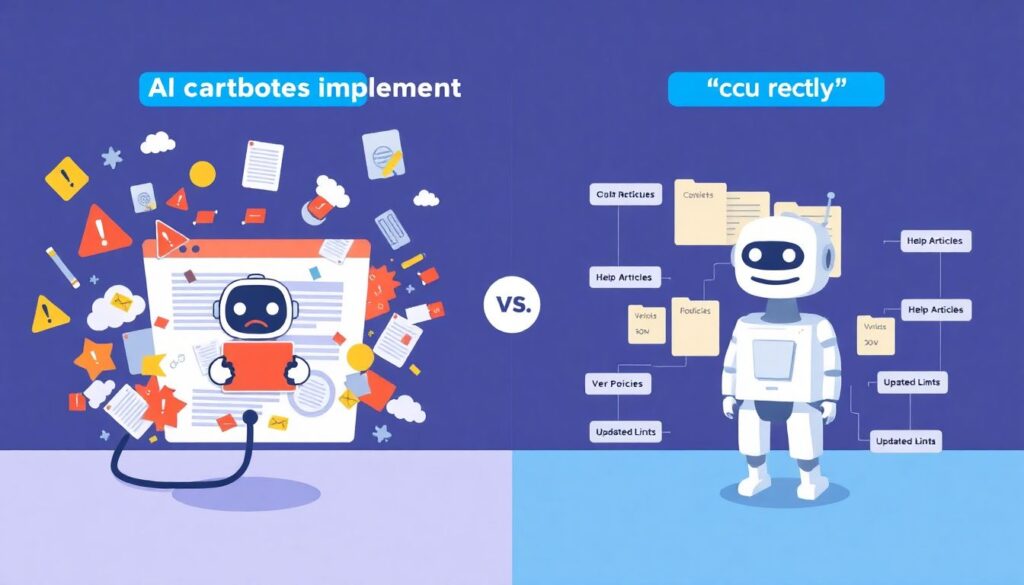
Most teams start here, and most do it wrong. They turn on a generic chatbot, point it at their website, and let it loose on customers. That’s how misinformation and escalation storms happen.
To get it right, you need:
– A curated, versioned knowledge base (help articles, policies, updated limits)
– Clear guardrails: topics the bot must not answer (tax advice, specific trading recommendations)
– Handover logic: when confidence is low, route to a human with full conversation context
– Tone and compliance rules, especially for regulated jurisdictions
For users, a good AI chatbot for crypto platform customer support should feel like a smart, patient colleague who knows the product deeply but doesn’t guess when it’s unsure. For your team, it should deflect simple tickets (password resets, fee explanations, basic how-tos) and free humans for complex or emotional cases, like frozen accounts or fraud disputes.
—
Step 4: Use AI personalization tools for crypto investors the right way
Personalization in crypto can be powerful, but it’s also a regulatory minefield if you’re not careful. You can tailor the interface without pushing people into specific trades.
Useful, low-risk personalization examples:
– Interface mode: beginner view hides complex order types; advanced view shows full depth
– Content: offer explainers about assets users hold, instead of pushing them to “hot” tokens
– Education: adapt tutorials based on behavior (never traded futures → show risk-focused content)
AI personalization tools for crypto investors should lean toward education and clarity, not FOMO and hype. A very common mistake is blurring the line between personalized guidance and financial advice. If your AI sounds like it’s telling users what to buy, you’re courting both reputational and regulatory trouble.
—
Step 5: Choosing and integrating the right platforms

Not all tools are equal, and “best” depends on your size, region, and risk appetite. When you look at the best AI-driven cryptocurrency trading platforms on the market, you’ll notice they all share the same fundamentals: strong data pipelines, strict security, and incremental feature rollout.
When evaluating vendors or building in-house, check:
– Data isolation: can you keep user data encrypted and region-compliant?
– Auditability: can you explain why the model made a decision (especially for KYC and risk)?
– Latency: is the model fast enough not to slow down trading flows?
– Customization: can you define policies, tones, and knowledge boundaries?
New teams frequently pick tools solely on model “IQ” (benchmarks, parameter count) and ignore governance and observability. High-performing but opaque models are a liability when something goes wrong and you can’t trace the cause.
—
Step 6: AI customer experience solutions for crypto exchanges in practice
To make the whole thing coherent, don’t treat each AI feature as a separate product. Think in layers:
– Foundation: secure data, events, user profiles, content
– Intelligence: models for language, prediction, classification, risk scoring
– Experience: chat interfaces, smart forms, personalized dashboards, notifications
AI customer experience solutions for crypto exchanges work best when each surface (onboarding, dashboard, support, mobile app) talks to the same underlying services. If the bot says your withdrawal limit is X, but the UI shows Y, users will trust neither.
—
Step 7: Monitoring, troubleshooting, and continuous improvement
Once you launch, the real work begins. AI systems degrade over time as your product, rules, and markets change. You need a feedback loop, not a “set and forget” launch.
Track at least:
– Containment rate: how many support issues are fully solved by AI
– Escalation reasons: where AI fails (complex cases, unclear policies, bad wording)
– User satisfaction per feature: short thumbs up/down or CSAT scores after interactions
– Safety incidents: wrong instructions about withdrawals, fees, or security
When something goes wrong, troubleshoot systematically:
– Check data freshness: is the knowledge base up to date?
– Review prompts and policies: did guardrails get relaxed or changed?
– Inspect a sample of conversations: are users asking things the bot wasn’t trained for?
– Validate integrations: are limits, fees, and balances being pulled from the right source?
A frequent newbie mistake is assuming “the model is bad” when most issues come from stale documentation, broken integrations, or missing escalation rules.
—
Common beginner mistakes to avoid
To make this concrete, here are the pitfalls that repeatedly damage AI-driven customer experiences in crypto platforms:
– Launching without guardrails
Teams switch on a generic assistant without defining forbidden topics, escalation paths, or tone. Result: the bot speculates on legal, tax, or trading outcomes and users take it as advice.
– Ignoring regional and regulatory context
Crypto rules change per country. If your AI gives the same KYC or product availability answer to everyone, you’ll confuse or mislead a chunk of your user base.
– Over-automating high-risk decisions
Fully automated account closures or KYC rejections based solely on model scores are a recipe for angry, public backlash. Always have a manual review option and clear appeal paths.
– No human backup during crises
During volatile markets or outages, users want real humans. Relying solely on AI during an incident makes your platform feel abandoned and untrustworthy.
– Treating AI as a marketing gimmick
Slapping “AI” on everything without tying it to real improvements in support response time, onboarding speed, or error reduction is a short-lived PR stunt.
—
How to roll out AI in safe, manageable steps
Instead of a full-blown “AI overhaul,” roll out gradually:
– Start with internal tools: use AI to help support agents draft replies and find docs faster.
– Move to user-facing but low-risk features: glossary explanations, interface tutorials, general education about blockchain concepts.
– Then enhance onboarding and help center: guided flows, smart FAQs, contextual hints.
– Finally, expand to more complex areas: nuanced support conversations, risk-based prompts, and adaptive dashboards.
Treat each step as an experiment with clear success metrics, like reduced first-response time or higher completion rates in KYC. If those don’t move, iterate before expanding.
—
Bringing it all together
When well-designed, AI-driven customer experiences in crypto platforms feel invisible: onboarding is smooth, explanations are clear, help is instant, and users feel in control. Under the hood, you might be running AI-powered KYC and onboarding for crypto platforms, support automation, and intelligent personalization — but from the user’s view, it just “works.”
If you avoid the beginner traps (noisy chatbots, reckless automation, ignored regulations) and treat AI as a structured part of your product architecture, you’ll build the kind of platform users trust with their time, data, and money.