
Why autonomous decisions matter in smart cities
When people talk about “smart cities”, they usually mean sensors, connected traffic lights and mobile apps. The real game changer, though, is when these systems start making local decisions on their own, in real time. Autonomous decision‑making in urban systems lets traffic controllers reroute flows instantly, energy grids balance loads proactively and emergency services coordinate without waiting for manual commands. The catch is trust: if algorithms act autonomously, citizens and city operators must be sure no one can quietly rewrite rules, fake data or override outcomes for private gain.
Where blockchain fits into the picture
This is where smart city blockchain solutions come in. Blockchain gives you an immutable, time‑stamped log of “who decided what and based on which data”. Instead of every critical rule being hidden in a proprietary backend, you can encode key decision policies in smart contracts, published on a permissioned ledger shared by utilities, agencies and certified vendors. That doesn’t mean every sensor writes directly to the chain; rather, summarized decisions, audit trails and governance changes land on‑chain, so disputes can be resolved using a shared, verifiable history instead of conflicting internal logs.
Core tools and building blocks
To get from concept to working autonomous smart city infrastructure, you need a fairly specific toolbox. On the hardware side, it starts with IoT sensors and actuators that support strong device identity and encrypted channels, not just “plug and pray” gadgets. On the software side, you’ll need an enterprise‑grade blockchain platform, usually permissioned, an orchestration layer like Kubernetes for microservices, robust APIs and an event‑driven middleware that can filter raw streams before anything touches the ledger. Add in MLOps tooling for deployed models and a security stack with HSMs, PKI and continuous monitoring.
Data pipelines and integration layer
Experts insist that the invisible hero is the data pipeline. You want clean, timestamp‑accurate, signed telemetry feeding your decision engines, not a noisy firehose. That’s why smart city IoT and blockchain integration typically uses gateways doing validation, aggregation and anomaly detection at the edge, then passing only relevant, compressed facts to the core. Above that, a message bus ties together analytics services, machine‑learning models and rule engines. Blockchain nodes subscribe to specific events, recording decisions and approvals, while off‑chain databases handle heavy analytics so the ledger stays lean and performant.
Step‑by‑step design process
Seasoned city architects recommend starting with a single end‑to‑end use case instead of an abstract platform. Pick, for example, adaptive street lighting plus energy optimization. First, map all actors: devices, operators, regulators, residents, third‑party providers. Second, define what must be autonomous (brightness control, load shifting) and what needs human sign‑off (tariff rules, override procedures). Third, identify which decisions have long‑term impact or high risk; only those usually justify blockchain anchoring, while routine low‑risk events can remain off‑chain to avoid unnecessary latency and cost.
Implementing decision logic and governance
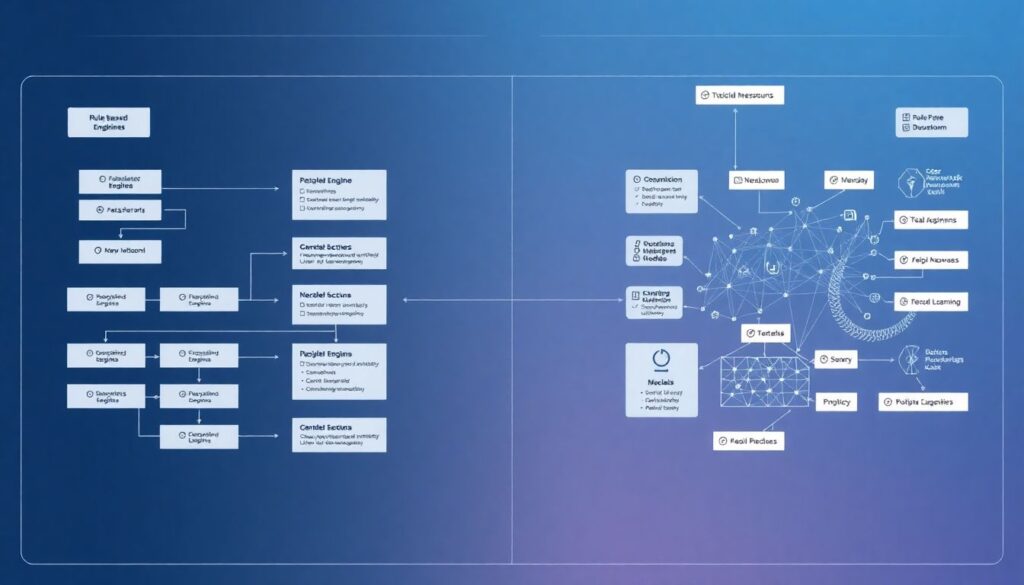
Once you know your scope, design the decision logic. Combine rule‑based engines for transparent policies with ML models where patterns are too complex for hand‑written rules. Experts advise wrapping each decision flow with explicit policy metadata: who owns the rule, how it can be changed, which KPIs justify retraining. Those rules and change procedures are codified as smart contracts, enabling decentralized decision making in smart cities without losing accountability. Governance councils—often cross‑departmental—control contract upgrades via multisignature schemes, so no single agency can silently change urban automation behavior.
Deploying and testing in controlled phases
Rollout should be gradual. Start in a test district or even a digital twin environment, where simulated traffic, weather and demand can stress the system. Run A/B configurations: part of the area uses autonomous logic with blockchain anchoring, the rest sticks to legacy control, then compare response times, fault rates and citizen satisfaction. Experts strongly recommend chaos testing: deliberately inject faulty sensor data, node outages and conflicting commands. Observe not only how the system self‑corrects but also how clearly operators can reconstruct what happened by reading blockchain records and monitoring dashboards.
Blockchain for smart city data management

A common misconception is that every measurement must live on‑chain. In reality, blockchain for smart city data management should focus on integrity, provenance and access rights, not raw storage. Hashes of datasets, model versions and configuration baselines go on the ledger, while the bulk is held in distributed storage or city data lakes. Access control smart contracts issue revocable permissions to agencies and private partners, with each query or export logged. This way, when an autonomous decision is challenged, you can reliably trace which data snapshot and model variant produced it.
Typical issues and troubleshooting strategies
When projects move from pilot to production, a familiar set of problems appears. The first is latency: if you naively route every event to the chain, intersection controllers or microgrids might react too slowly. The fix is to handle time‑critical loops fully at the edge and commit only summarized states or exceptions to the ledger. Another frequent issue is data drift: as city behavior changes, ML‑driven decisions degrade. Experts recommend automatic drift detection with alerts tied to governance workflows, so a contract can temporarily reduce autonomy and require manual approval until models are retrained.
Security, failures and human factors
Operationally, the most dangerous failures involve silent degradation: a misconfigured oracle, a compromised gateway or a partially partitioned network. Robust monitoring must watch not just device health but also the consistency between on‑chain records and off‑chain reality. Veteran practitioners stress regular penetration tests, red‑team exercises and public transparency reports to maintain trust. Finally, don’t ignore human factors. Operators must have clear, rehearsed playbooks for emergency overrides, and citizens need accessible explanations of how automated decisions work, what is logged and how they can contest outcomes if something feels unfair.