Why token economies suddenly matter so much

If you run any kind of digital platform in 2025, you can’t really ignore tokens anymore. What started as a niche crypto experiment is now creeping into mainstream product roadmaps, boardroom slides, and even regulator briefings. Token economies let you bake incentives, ownership and governance directly into your app, instead of relying only on points, likes or vague “community vibes”. Done right, they keep users engaged, align investors with builders, and give power users a real voice. Done badly, they turn into speculation engines that burn out your brand and your community. This article will walk you through how token economy platform governance solutions are evolving, what numbers actually matter, and how to think about incentives without turning your product into a casino.
Short version: tokens are no longer just “coins”; they’re new kinds of business primitives.
From cypherpunks to platforms: a quick history
Back in 2009–2015, Bitcoin and early altcoins were mostly about censorship‑resistant money. There was no serious talk of product analytics, churn, or “crypto token incentive models for user engagement”. Then Ethereum launched in 2015 and smart contracts turned blockchains into programmable platforms. By 2017, ICOs exploded: thousands of projects tried to fund themselves by selling tokens that vaguely promised “utility”. Most of those collapsed, but one big idea survived: tokens can coordinate strangers on the internet. DeFi in 2020–2021 pushed that further with liquidity mining and yield farming, proving that if you pay people in tokens, they will show up — though not always for the reasons you want.
Those cycles taught a painful but useful lesson: incentives without governance are fireworks, not infrastructure.
Historical turning point: when governance got real
The real inflection came around 2019–2022, when decentralized autonomous organizations (DAOs) began handing serious decisions to token holders: protocol upgrades, treasury spending, fee models. Uniswap, Aave, MakerDAO and others collectively put billions of dollars under some form of token governance. By 2023, over 5 million on‑chain governance votes had been cast across major protocols, according to public analytics. That’s not “everyone”, but it’s no longer a toy. The best of these DAOs treated decentralized platform governance token development as a product discipline: clear processes, delegation, working groups, and actual accountability.
In parallel, Web2 giants quietly studied this playbook and started piloting internal token‑like systems without the crypto branding.
What a modern token economy actually is
Today, a serious token economy is a layered system, not just a token ticker. At the bottom you have the chain and smart contracts: issuance, transfer rules, vesting, staking. On top of that sits the governance architecture: who proposes, who votes, quorum, vetoes, emergency brakes. Then come incentive flows: how users earn, spend, lock or lose tokens through real actions on the platform. Finally, there’s the narrative layer: why the token exists, what “ownership” realistically means, and where value could accrue. Mature web3 tokenomics design services for platforms now start with behavior mapping before they touch supply curves or fancy charts. Their first question is simple: “Which behaviors must be encouraged, and which must be made expensive or impossible?”
If you can’t answer that concretely, you’re not ready to issue a token; you’re just designing a volatility machine.
Stats you should actually care about
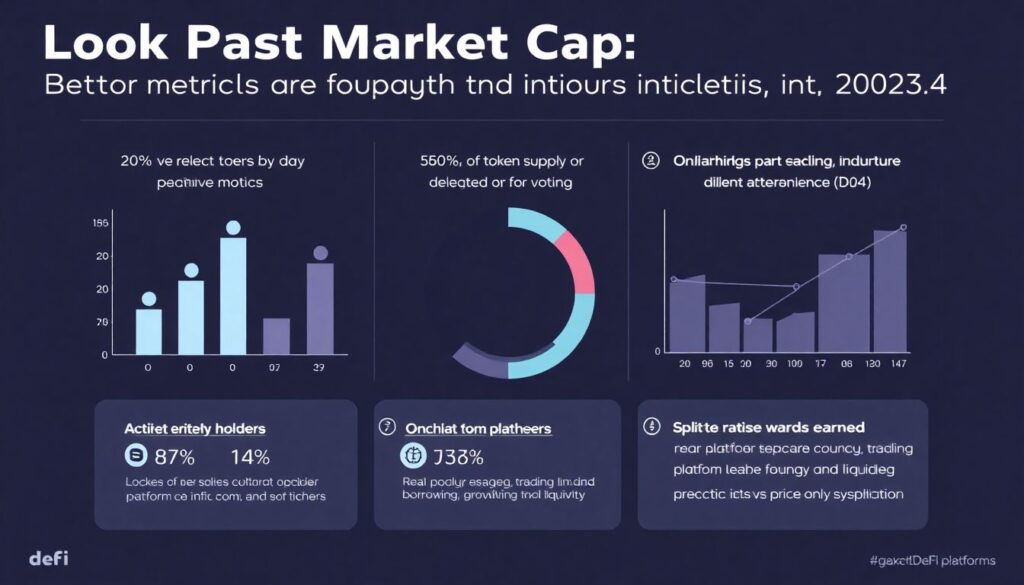
Look past market caps. For governance and incentives, better metrics include: percentage of tokens held by active users versus passive investors, share of supply delegated for voting, and the ratio of rewards earned through real usage versus pure speculation. On leading DeFi platforms in 2024, active governance participation typically hovered between 5–15% of circulating supply, with a few standouts above 25% thanks to aggressive delegation schemes. Meanwhile, token‑rewarded users often generated 50–80% more on‑chain activity while rewards lasted, but only 20–40% of that behavior remained once subsidies dropped. Those numbers show why you must design your token economy to gracefully taper incentives and let intrinsic product value take over.
In other words, use tokens to start the engine, not to tow the car forever.
Designing incentives without poisoning behavior
When you think about crypto token incentive models for user engagement, resist the urge to “pay for everything”. Over‑rewarding trivial actions trains users to game metrics instead of creating value. A healthier pattern is to reward behaviors that are costly to fake or clearly long‑term aligned: liquidity provisioning, high‑quality content, dispute resolution, code contributions, or referrals that actually stick. You can also combine economic and reputational signals: let people earn tokens plus non‑transferable badges or scores that feed into reputation‑based access. This hybrid design discourages pure mercenaries, because gaming the system for tokens alone is much harder when reputation is also on the line.
Think of tokens as performance‑based equity, not coupons: they should feel scarce, consequential, and meaningfully tied to the platform’s future.
Economic aspects: value, dilution and sustainability
Economically, your token is a claim on future coordination, not necessarily on cash flows. That subtlety matters. If you promise dividends without legal structure, you attract regulators, not users. Modern token models typically separate three buckets: a governance token that steers the system, a utility token for in‑app operations, and sometimes a separate “points” layer for fast‑tuning short‑term incentives. Inflationary rewards can bootstrap liquidity and engagement, but every token you emit dilutes governance and weakens future upside. Sustainable designs cap long‑term inflation, tie emissions to real revenue or fee burns, and gradually shift rewards from new issuance to profit sharing and buybacks where legally possible.
If new user value doesn’t eventually outpace token emissions, you’re just subsidizing churn with your cap table.
Platform governance: from founders to communities
Token economies reshape who holds the steering wheel. In Web2, governance is board meetings and opaque policy changes; in Web3, it’s on‑chain proposals and public debate. Properly configured token‑holder voting can prevent unilateral rule changes, raise the cost of abuse, and make controversial decisions more legitimate. However, naive “one token, one vote” systems quickly drift into plutocracy, where whales quietly decide everything. Better token economy platform governance solutions use delegation, vote‑boosting for smaller holders, or bicameral models where long‑term stakers or reputational councils share power with raw capital.
The goal is not full direct democracy; the goal is contestability — no one can hijack the platform without a fight that’s visible to everyone.
Blockchain-based rewards and loyalty in practice
A growing number of consumer apps are adopting blockchain-based user rewards and loyalty token systems without shouting “crypto” at users. Think of it as airline miles 2.0: points that are provably scarce, interoperable across partners, and sometimes tradable. In 2024, several Web3 social platforms reported 30–60% higher 90‑day retention among cohorts that received on‑chain loyalty rewards versus control groups with only classic badges. Brands are exploring shared loyalty tokens that work across multiple apps, letting users “carry” their status through the wider ecosystem. For you as a platform operator, that means users can’t be easily locked in by friction alone — you must compete on actual experience, because switching no longer erases their earned status.
That shift is uncomfortable, but it tends to grow the total market, not shrink it.
Industry impact and where things are heading by 2030

By 2025, the total on‑chain value governed by token holders is estimated in the hundreds of billions of dollars, and venture decks routinely include token roadmaps alongside product streams. Consulting firms have spun up dedicated web3 tokenomics design services for platforms, just as they once did for subscription pricing or ad tech. Over the next five years, expect tighter regulation around consumer tokens, more explicit taxation rules, and clearer separation between “governance assets” and “securities”. At the same time, large Web2 companies will likely roll out internal tokens for API access, data marketplaces, and partner incentives, even if the underlying tech is abstracted away behind SDKs.
You’ll see fewer meme coins, more infrastructure tokens, and many hybrids tied to real revenue and real‑world assets.
Practical steps if you’re considering a token
If you’re thinking about decentralized platform governance token development for your own product, start with three blunt questions. First: what decisions genuinely need community input, and at what scale? Second: which user behaviors are so critical that you’re willing to dilute ownership to strengthen them? Third: how will this look under the harsh light of regulators and mainstream users in three years, not three months? Map user journeys, simulate worst‑case incentive gaming, and only then design supply, distribution, and governance flows. Test everything with off‑chain points or limited pilots before you deploy immutable contracts.
Tokens are powerful coordination tools, but they are also commitments you can’t easily unwind. Treat them with the seriousness of rewriting your business model, because that’s effectively what you’re doing.